
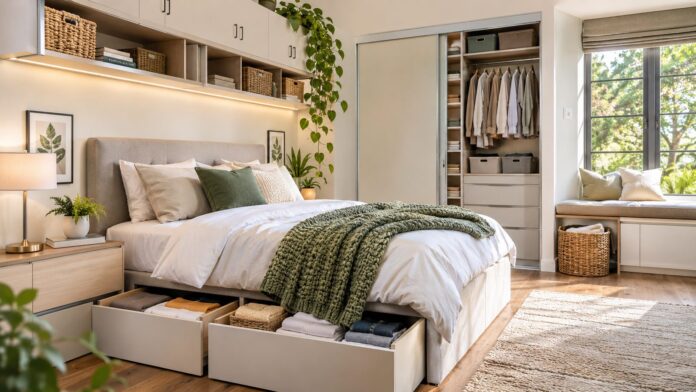
A well-organised bedroom needs more than a large wardrobe and a chest of drawers. The smartest bedroom storage ideas make use of overlooked spaces, combine furniture functions and keep everyday belongings accessible. Whether you live in a Victorian terrace, a modern flat or a family home, practical solutions can make your bedroom feel more spacious. You don’t need to undertake a complete renovation to improve your available space. Start with the area underneath your bed, look at unused wall space and reconsider how your wardrobe is organised. These practical ideas will help you create a bedroom that feels tidy, comfortable and easy to use.
Quick Reference: Bedroom Storage Ideas
| Storage solution | Best suited to | Main benefit |
|---|---|---|
| Ottoman bed | Small and medium bedrooms | Hidden storage beneath the mattress |
| Divan drawers | Everyday clothing | Easy access to stored belongings |
| Sliding wardrobe | Narrow bedrooms | No hinged-door clearance |
| Fitted alcove units | Victorian and Edwardian homes | Uses awkward chimney-breast spaces |
| Floating shelves | Compact rooms | Frees valuable floor space |
| Storage headboard | Bedrooms without bedside tables | Keeps essentials close |
| Cabin and high-sleeper beds | Children’s rooms and box rooms | Combines sleeping and storage |
| Vacuum storage bags | Seasonal clothing | Reduces storage volume |
Key Takeaways
- Use the space beneath your bed before purchasing additional furniture.
- Choose fitted or sliding wardrobes when floor space is limited.
- Install floating shelves and hooks to use otherwise empty walls.
- Consider chimney-breast alcoves for custom-built cupboards.
- Choose multifunctional furniture for box rooms and children’s bedrooms.
- Declutter regularly before investing in additional storage.
1. Make the Most of Under-Bed Storage
The space underneath your bed can provide substantial additional storage. It is particularly useful for spare bedding, winter clothing, shoes and occasional-use belongings. Choose a solution that suits your bed frame and how frequently you need access.
Ottoman and gas-lift beds
An ottoman bed provides a large concealed compartment beneath the mattress. Gas-lift mechanisms help raise the mattress platform, allowing you to access stored belongings. This arrangement works particularly well for bulky duvets, pillows and spare blankets. Check the lifting mechanism, available storage depth and mattress compatibility before purchasing. Leave enough room to operate the mechanism safely and follow the manufacturer’s instructions. Keep frequently needed belongings towards the easiest accessible areas.
Divan beds with drawers
A divan bed with built-in drawers provides convenient storage without lifting the mattress. It works particularly well for folded clothing, bedding and accessories. Check which sides the drawers open towards before choosing your layout. This detail matters when your bed sits close to a wall or wardrobe. Some arrangements offer drawers on one side, while others provide access from both sides. Choose according to your available floor space.
Rolling storage boxes
If replacing your bed isn’t practical, rolling boxes offer an affordable alternative. Look for shallow containers that fit beneath the frame without catching on carpet. Transparent lids and labels make identifying belongings easier.
2. Choose the Right Wardrobe
Your wardrobe should provide enough hanging and folded storage without dominating the bedroom. Both fitted and freestanding options have advantages, depending on your budget and room dimensions. Consider how much clothing you own before deciding between them.
| Wardrobe type | Advantages | Considerations |
|---|---|---|
| Fitted wardrobe | Uses wall height and awkward spaces | Requires planning and installation |
| Freestanding wardrobe | Flexible and movable | Can leave unused gaps |
| Sliding-door wardrobe | Saves door-opening clearance | Requires suitable wall width |
| Mirrored wardrobe | Combines storage and reflection | Needs regular cleaning |
Fitted versus freestanding wardrobes
Fitted wardrobes make good use of unusual room dimensions and can extend towards the ceiling. They work particularly well around chimney breasts, alcoves and sloping ceilings. Internal layouts can include rails, shelves, drawers and shoe compartments. Freestanding wardrobes offer greater flexibility if you rent or expect to move. They are available in different widths, heights and depths. Measure the available space carefully, including skirting boards and door openings.
Sliding doors for smaller bedrooms
Traditional hinged wardrobe doors need room to open fully. Sliding doors remove this requirement and can help preserve narrow walking routes. They are particularly useful when a bed sits close to the wardrobe.
Improve your wardrobe’s internal organisation
You can increase usable space without replacing the entire unit. Add practical organisers to separate clothing and accessories. Consider:
- Adjustable shelves for folded jumpers and bedding.
- Additional hanging rails for shorter garments.
- Drawer dividers for socks and underwear.
- Hanging organisers for handbags and accessories.
- Shoe racks to prevent footwear accumulating on the floor.
3. Use Walls for Additional Storage
Walls offer useful storage opportunities when floor space is limited. Floating shelves can hold books, decorative objects and smaller storage baskets. Position them where you can reach everyday belongings comfortably. Picture ledges provide a shallow surface for framed photographs and lightweight accessories. They also allow you to change displays without installing additional shelves. Keep heavier belongings on properly supported shelving. Pegboards offer another flexible solution for accessories and smaller items. Use suitable hooks and attachments to organise jewellery, bags and frequently used belongings. Over-door hooks can also accommodate dressing gowns, handbags and tomorrow’s clothing. Always check the wall material and fixing requirements before installation. Match the fixings to the expected load and avoid placing heavy objects above sleeping areas. A well-planned wall arrangement can reduce the need for extra furniture.
4. Consider a Storage Headboard
A storage headboard combines a practical sleeping feature with additional space for everyday essentials. Some designs include open shelves, small cupboards or concealed compartments. They can reduce the need for separate bedside furniture. This option suits narrow bedrooms where traditional bedside tables obstruct movement. Keep books, glasses and small personal items within easy reach. Avoid overcrowding the headboard with unnecessary objects. For more ideas about creating a comfortable sleeping environment, explore DecoHome’s calm bedroom setup guide.
5. Add Fitted Storage Around Chimney-Breast Alcoves
Victorian and Edwardian homes often feature chimney breasts with alcoves on either side. These recesses can become useful storage areas instead of remaining awkward empty spaces. Bespoke fitted furniture can make excellent use of their dimensions. Consider installing cupboards beneath open shelving. Closed cupboards can conceal clothing, accessories and household belongings. Upper shelves can accommodate books, baskets and decorative items. Measure each alcove separately because older properties do not always have perfectly symmetrical walls. Check skirting boards, chimney-breast projections and existing fireplaces before commissioning furniture. A carefully measured design can provide storage without narrowing the room. If a full fitted installation exceeds your budget, consider freestanding shelving or a narrow chest of drawers. Choose furniture that fits the recess rather than leaving large gaps. Matching the finish to your existing woodwork can help the arrangement feel integrated.
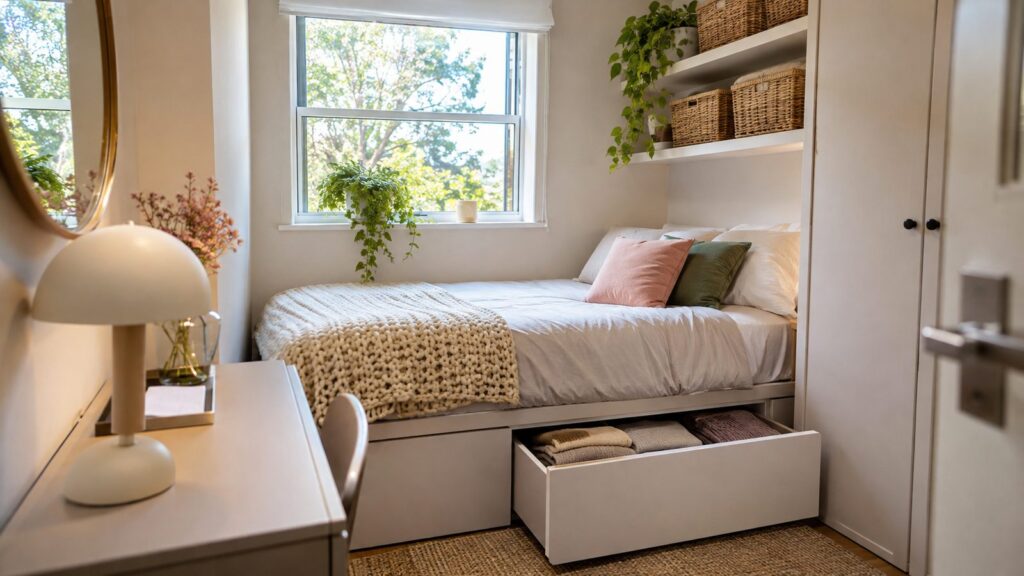
6. Make Small Bedrooms and Box Rooms Work Harder
Small bedrooms need carefully selected furniture rather than numerous storage units. Start by identifying the items that genuinely need to remain in the room. Then choose furniture that combines two or more functions. Cabin beds provide storage drawers or cupboards beneath an elevated sleeping platform. They can be useful for children’s rooms and compact guest bedrooms. High-sleeper beds offer additional space underneath for a desk, wardrobe or study area. Wall-mounted desks are another practical option when floor space is restricted. Pair one with floating shelves above for books and stationery. Choose a folding design if you need the area for other activities. Before purchasing anything, measure the full room and check ceiling height. Allow comfortable access around the bed and ensure furniture does not obstruct windows or doors. For further styling advice, see DecoHome’s room decor ideas for UK homes.
7. Organise Children’s Bedrooms
Children’s bedrooms need storage that is accessible, practical and easy to maintain. Low-level baskets and labelled boxes help children identify where belongings belong. Open shelving can make frequently used toys and books easier to reach. Consider combining several storage functions:
- Under-bed drawers for spare bedding and toys.
- Wardrobe organisers for clothing and school accessories.
- Book ledges for favourite reading materials.
- Toy baskets for everyday play items.
- Desk drawers for stationery and craft supplies.
Choose durable furniture that can adapt as children grow. Storage needs will change as toys make way for books, hobbies and school equipment. Flexible shelving and adjustable organisers can extend the usefulness of existing furniture. Safety matters: Anchor tall wardrobes, chests of drawers and bookcases securely to the wall using appropriate anti-tip fixings. This is particularly important in children’s bedrooms, where climbing and pulling drawers can cause furniture to topple. Follow the furniture manufacturer’s installation guidance.
8. Don’t Overlook Bedside Tables
Bedside tables with drawers provide convenient storage for smaller belongings. They keep everyday essentials close without requiring another large piece of furniture. Choose a narrow design when space between the bed and wall is restricted. Consider models with a combination of drawers and open shelving. Drawers conceal personal belongings, while open shelves provide quick access to books. Floating bedside tables can also free up floor space beneath them.
9. Use Baskets and Vacuum Storage Bags
Storage baskets provide a simple way to organise smaller belongings. Place them inside wardrobes, on shelves or beneath suitable furniture. Matching baskets can also create a more consistent appearance. Vacuum storage bags are useful for seasonal clothing and spare bedding. Removing excess air reduces the volume of suitable soft items. Store them in an appropriate dry location and follow the manufacturer’s instructions. Separate belongings into clearly labelled groups. For example, keep summer clothing, winter accessories and spare bedding together. This makes seasonal changes easier and reduces unnecessary searching.
10. Declutter Before Buying More Furniture
Adding another wardrobe doesn’t always solve a storage problem. Sometimes the room contains belongings that are no longer needed. Sorting these items first helps you understand how much storage you genuinely require. A KonMari-style approach can help you make considered decisions. Work through clothing, accessories and other personal belongings in manageable groups. Handle each item and decide whether it still serves a useful purpose. Create three main categories:
- Keep: Items you use, need or genuinely value.
- Donate: Suitable belongings that someone else could use.
- Sell: Items in good condition that may have resale value.
Dispose of unsuitable items responsibly through appropriate recycling or waste services. Avoid filling new storage units with belongings you have not used for years. A regular seasonal review can prevent clutter returning.
How Much Does Bedroom Storage Cost in the UK?
Costs depend on furniture dimensions, materials, construction and installation requirements. Ready-made storage and custom-built joinery have different price considerations. Compare specifications and obtain quotes before committing to larger projects. Prices for bedroom storage vary widely, from inexpensive boxes and baskets to premium storage beds and bespoke joinery. Check current prices from several UK retailers and joiners before you decide on a budget. For fitted wardrobes, alcove cupboards, shelving and other bespoke work, prices vary according to the property and design. Installation, finishing and material choices can also affect the final cost. Request several itemised quotations before starting a project.
A Practical Bedroom Storage Plan
Use this simple sequence to decide where to begin:
- Measure the room: Record wall dimensions, ceiling height and available walking space.
- Declutter belongings: Separate items into keep, donate and sell categories.
- Assess existing furniture: Identify unused drawers, shelves and wardrobe space.
- Use under-bed space: Add suitable boxes or consider a storage bed.
- Improve wardrobe organisation: Introduce dividers, rails and internal organisers.
- Use vertical space: Install suitable shelving, ledges and hooks.
- Review the layout: Check that doors, drawers and walkways remain accessible.
Frequently Asked Questions
What are the best bedroom storage ideas for small rooms?
Ottoman beds, sliding wardrobes and floating shelves are useful options. They provide storage without requiring numerous additional furniture pieces. Under-bed boxes and narrow bedside tables can also make compact rooms easier to organise.
How can I create more storage without buying a new wardrobe?
Start by organising your existing wardrobe with dividers and additional hanging rails. Use the space beneath your bed and introduce suitable wall-mounted shelves. Decluttering unused clothing can also release considerable room.
Are ottoman beds worth considering?
Ottoman beds are worth considering when you need concealed space for bulky belongings. Their lift-up design provides access to a large compartment beneath the mattress. Check the mechanism, available clearance and mattress compatibility before purchasing.
How can I use alcoves in older UK houses?
The alcoves either side of Victorian and Edwardian chimney breasts can accommodate fitted cupboards and shelving. Measure each recess carefully before choosing a design. Combining closed cupboards with open shelves provides both concealed and accessible storage.
What is the safest way to arrange furniture in children’s bedrooms?
Keep frequently used belongings within children’s reach and avoid placing heavy objects overhead. Secure tall wardrobes, chests of drawers and bookcases to suitable wall fixings. Follow the manufacturer’s anti-tip and installation instructions.
How can I keep seasonal clothing organised?
Use labelled baskets, wardrobe organisers and suitable vacuum storage bags. Keep out-of-season garments separate from everyday clothing. Ensure stored items are clean and completely dry before packing them away.
How often should I declutter my bedroom?
A seasonal review is a useful starting point for most households. Check clothing, accessories, bedding and items accumulating inside drawers. Remove belongings you no longer need before adding more storage.
Final Thoughts
A practical bedroom should provide enough storage without sacrificing comfort or usable floor space. Start with the largest opportunities, including the bed, wardrobe and unused alcoves. Then introduce smaller additions such as floating shelves, bedside drawers and labelled baskets. Remember that organisation matters as much as furniture selection. Decluttering regularly prevents unnecessary belongings from filling available space. With careful planning, even a narrow box room can become a comfortable and well-organised bedroom. —