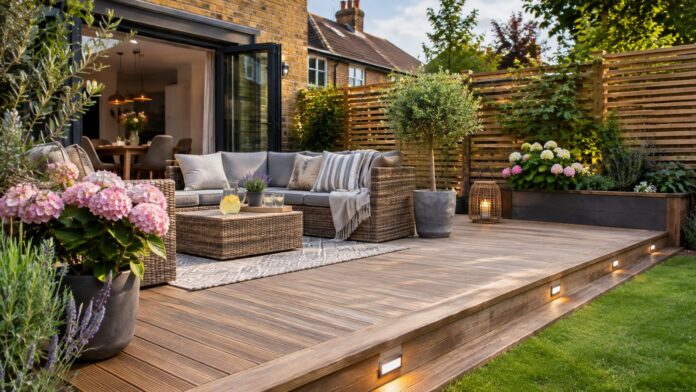
Garden decking can turn an awkward outdoor space into a practical area for relaxing, dining and entertaining. The right decking ideas depend on your garden’s shape, available space, budget and maintenance preferences. From multi-level timber platforms to compact composite seating areas, there are designs to suit almost every UK home. This guide explores layouts, materials, colours and finishing touches, with practical advice for British weather.
Decking Ideas at a Glance
| Design consideration | Recommended approach | Best suited to |
|---|---|---|
| Multi-level layouts | Separate platforms connected by steps | Sloping gardens |
| Wraparound designs | Extend the platform around the house | Larger gardens |
| Ground-level designs | Keep the platform close to ground level | Small and level gardens |
| Timber materials | Pressure-treated softwood or hardwood | Natural garden styles |
| Composite materials | Wood-plastic composite boards | Lower-maintenance spaces |
| Lighting | Solar lights and low-voltage fittings | Evening entertaining |
| Small spaces | Narrow platforms and corner seating | Compact gardens |
| Colour schemes | Natural oak, grey and warm brown | Modern and traditional homes |
Key Takeaways
- Choose a layout that suits your garden’s shape and everyday activities.
- Compare softwood, hardwood and composite before selecting materials.
- Prioritise drainage, ventilation and slip resistance in wet weather.
- Use lighting, planters and built-in seating to improve functionality.
- Check local planning requirements before constructing raised platforms.
- Clean surfaces regularly to control algae, moss and accumulated dirt.
12 Decking Ideas for Different Garden Layouts
The layout determines how comfortably you can use your outdoor space. Consider existing levels, access points, sunlight and the position of your garden furniture. These designs offer different ways to make an outdoor area more useful.
1. Multi-Level Decking for Separate Garden Zones
Multi-level platforms create distinct areas without requiring separate structures. You could position an outdoor dining table on the upper level and lounge seating below. Add wide steps between the platforms to create a comfortable transition. This arrangement works particularly well in sloping gardens. It also creates opportunities for integrated planters and attractive lighting. Keep changes in level consistent and provide suitable guarding where required.
2. Wraparound Decking for a Larger Outdoor Living Area
Wraparound designs extend the platform along two or more sides of a property. They can connect different doors, seating areas and garden entrances. This arrangement also creates a stronger visual relationship between indoor and outdoor spaces. Choose matching boards for a consistent appearance. You can divide the available area into dining, relaxation and planting zones. Leave enough space around doors and windows for comfortable access.
3. Floating or Ground-Level Decking
Ground-level platforms create a simple transition between the house and garden. They work particularly well beside patio doors or lawn areas. A floating-style design can also create the appearance of a separate platform surrounded by gravel or planting. Keep sufficient clearance beneath the structure for airflow. Ensure rainwater can drain away rather than collecting underneath. A properly prepared base helps maintain stability and reduce movement.
4. Raised Decking on a Slope
A raised platform can create a level seating area where the natural ground falls away. It avoids extensive excavation and can make previously awkward garden space useful. Steps can connect the platform to the lower lawn. Structural design needs careful attention because elevated platforms carry additional risks. Foundations, supporting posts, joists and fixings must suit the height and intended loads. Consider professional design and installation for substantial raised structures.
5. Corner Decking for Unused Garden Space
A corner platform makes use of areas that might otherwise remain empty. It can accommodate a small bench, two chairs or a compact bistro table. Add a corner planter to soften the edges and introduce greenery. This arrangement is particularly useful in narrow gardens. Keep the shape simple to avoid unnecessary material and construction costs. Built-in seating can also save valuable floor space.
6. Decking Paths and Garden Walkways
Timber walkways can connect seating areas, sheds, lawns and garden entrances. They create a clear route through planted borders without covering the entire garden. Curved paths can suit informal planting, while straight boards create a cleaner appearance. Use appropriate foundations and consider the path’s exposure to rain. Choose textured surfaces and provide adequate lighting near steps or changes in direction. Leave sufficient width for comfortable everyday movement.
Choosing the Right Decking Material
Material selection affects appearance, durability, maintenance and overall cost. British weather makes drainage, surface grip and moisture protection especially important. Compare these three popular options before committing to a design.
| Material | Advantages | Disadvantages |
|---|---|---|
| Pressure-treated softwood | Affordable, widely available and easy to cut | Requires regular treatment and can deteriorate without care |
| Hardwood | Natural appearance, durability and attractive grain | Higher initial cost and specialist installation considerations |
| Composite | Lower routine maintenance and consistent appearance | Higher upfront cost and possible surface heating or algae build-up |
Pressure-Treated Softwood
Pressure-treated softwood is a popular choice for traditional garden projects. Preservative treatment helps protect the timber against decay and insect damage. It also offers an accessible starting point for homeowners working with tighter budgets. The surface needs regular cleaning and periodic protective treatment. Standing water, damaged coatings and poor ventilation can contribute to deterioration. Choose suitable external-grade boards and follow the manufacturer’s maintenance instructions.
Hardwood: Iroko and Balau
Hardwoods such as iroko and balau offer attractive natural grain and rich colouring. Their durability makes them suitable for outdoor applications when correctly specified and installed. They generally cost more than standard treated softwood. Hardwood still requires appropriate cleaning and occasional care. Check the timber’s suitability, sourcing and installation requirements before purchasing. Allow for natural colour changes caused by sunlight and weather exposure.
Composite Decking
Composite boards combine wood fibres and plastic materials. They provide a consistent finish and usually need less routine maintenance than timber. Available colours include grey, brown and wood-effect finishes. Composite does not mean maintenance-free. Dirt, leaves and algae can accumulate, particularly in shaded areas. Check the product’s slip-resistance information and cleaning instructions before choosing a particular board.
Making Outdoor Surfaces Safer in British Weather
Rain, shade and falling leaves can create slippery outdoor surfaces. Algae and moss can develop where moisture remains for extended periods. Good construction and regular cleaning help reduce these problems. Consider these practical precautions:
- Choose textured or suitable anti-slip boards for exposed areas.
- Consider grooved boards where their design and maintenance suit your needs.
- Provide effective drainage and avoid standing water.
- Maintain airflow beneath the platform.
- Remove leaves, dirt and organic debris regularly.
- Inspect fixings, boards and supporting structures periodically.
Grooves alone don’t guarantee a slip-resistant surface. Dirt and algae can collect within them, so regular brushing remains essential. The Timber Decking and Cladding Association provides further advice through its deck maintenance guidance.
Styling Ideas to Make Your Garden More Inviting
Once the basic structure is planned, decorative features help create a comfortable outdoor setting. Choose additions that suit the available space and how you intend to use it.
7. Add Low-Voltage and Solar Lighting
Lighting extends the usefulness of outdoor seating areas after sunset. Solar stake lights can illuminate borders and pathways without permanent wiring. Low-voltage fittings can provide more focused illumination around steps and seating. Use warm lighting for a relaxed atmosphere. Position lights to avoid glare and dark patches. Electrical installations should use equipment suitable for outdoor conditions.
8. Introduce Planters and Raised Beds
Planters soften straight board edges and introduce colour throughout the year. Choose containers with suitable drainage holes and enough room for plant roots. Raised beds can also create natural boundaries between dining and relaxation areas. Ornamental grasses, evergreen shrubs and seasonal flowers all work well. Consider plants that suit your garden’s sunlight and exposure. Use protective feet or supports beneath heavy containers where appropriate.
9. Install a Pergola or Canopy
A pergola creates a defined outdoor living area above the seating space. Climbing plants can soften the frame and provide seasonal interest. Retractable canopies offer additional flexibility when sunshine or light rain changes. Consider the structure’s wind exposure and fixing requirements. Leave sufficient headroom and avoid obstructing access routes. Explore more pergola ideas for UK gardens for complementary design inspiration.
10. Create an Outdoor Kitchen or BBQ Zone
An outdoor cooking area can make entertaining more convenient. Position the BBQ away from fences, combustible materials and overhead structures. Allow enough space for preparation, cooking and safe movement. Built-in worktops and weather-resistant storage can make the area more practical. Keep suitable clearance around cooking equipment and follow its safety instructions. Consider a non-combustible surface beneath the cooking zone.
11. Build a Hot Tub Deck
A hot tub can become the main feature of a larger outdoor platform. Surrounding it with seating and subtle lighting creates a dedicated relaxation area. Access steps and nearby privacy screens can improve everyday convenience. Structural capacity needs checking before installation. Water-filled tubs and occupants create substantial loads. Ask a suitably qualified professional to assess foundations, joists and supporting structures before placing a hot tub.
12. Add Built-In Seating and Privacy Features
Built-in benches make efficient use of awkward corners and narrow platforms. Add storage beneath suitable seats for cushions and garden accessories. Slatted screens can provide privacy without completely blocking daylight. Outdoor rugs and weather-resistant furniture add comfort and colour. Choose products intended for exterior use and allow wet cushions to dry properly. Keep furniture layouts flexible enough for easy cleaning and movement.
Small Garden and Balcony Decking Solutions
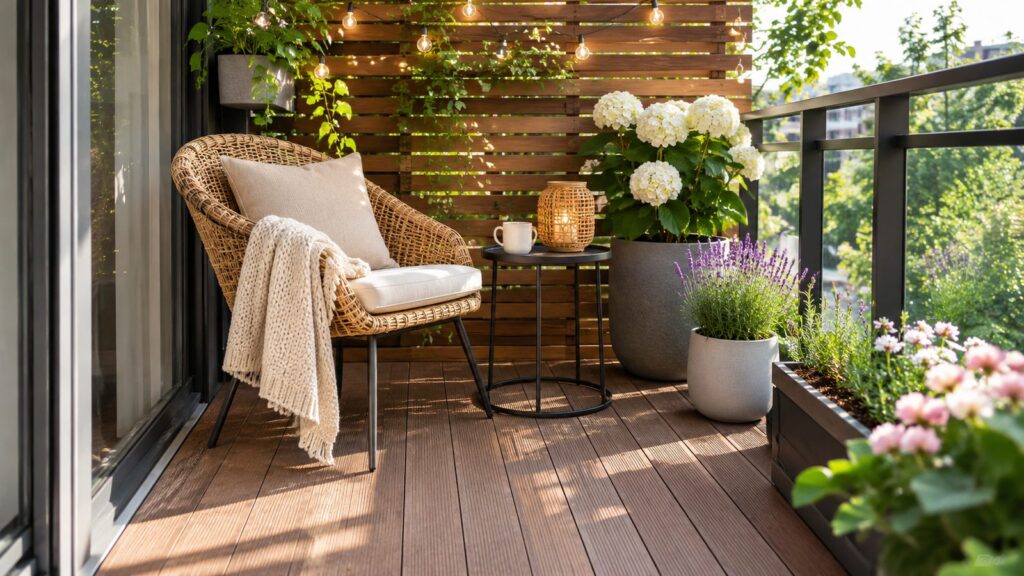
Compact outdoor areas benefit from careful measurements and simple layouts. Covering every available surface can make a small garden feel cramped. Instead, create one practical seating area and preserve space for planting or circulation. Consider these space-saving approaches:
- Use a narrow platform along one garden boundary.
- Choose folding chairs and compact bistro tables.
- Add vertical planters to free up floor space.
- Use corner benches instead of separate bulky chairs.
- Choose lighter board colours to create a brighter appearance.
- Combine a small deck with gravel or existing paving.
For balconies, check the building’s rules, weight restrictions and waterproofing arrangements first. Never assume a balcony can support additional decking, planters or heavy furniture. Tenants should also obtain the necessary landlord or management approval. You can find further inspiration in these budget-friendly small garden ideas.
Decking Colours, Stains and Finishes
Colour influences how the finished space relates to your house and planting. Natural timber shades complement traditional properties and softer garden designs. Grey and charcoal finishes suit contemporary homes and modern outdoor furniture. Popular colour choices include:
| Colour | Appearance | Works well with |
|---|---|---|
| Natural oak | Warm and traditional | Green planting and cream furniture |
| Golden brown | Rich and welcoming | Brickwork and timber pergolas |
| Charcoal grey | Modern and understated | Black furniture and pale planters |
| Silver grey | Light and contemporary | White walls and ornamental grasses |
| Dark walnut | Deep and sophisticated | Natural stone and warm lighting |
For timber, choose an exterior decking stain or oil suitable for the species and existing treatment. Test the finish on an inconspicuous area before applying it across the whole surface. Follow the manufacturer’s preparation, drying and reapplication instructions. Remember that natural timber changes colour outdoors. Sun exposure, rainfall and regular use influence its appearance over time. Composite colours can also vary between manufacturers and product ranges.
Practical UK Planning and Maintenance Considerations
Before construction, check whether your proposed design needs planning permission. In England and Wales, garden decking generally qualifies as permitted development when it meets applicable conditions, including a maximum height of 30cm above ground. Scotland has different rules, including a 50cm platform-height limit under relevant permitted development provisions. Conservation areas and listed buildings can have additional restrictions. Northern Ireland also has its own planning framework, so check with your local planning authority. For further guidance, consult the Planning Portal’s decking guidance and the relevant government guidance for your nation. Listed building consent, building regulations and other restrictions may apply independently. Maintenance also matters throughout the year. Brush away leaves and dirt, clean surfaces regularly and inspect timber for damage. Check drainage routes, ventilation gaps, fixings and supporting components, particularly after winter.
How Much Does Garden Decking Cost in the UK?
The total cost depends on material, platform size, ground preparation and installation complexity. Raised structures, steps, balustrades, lighting and bespoke features can increase the overall budget. Obtain several itemised quotations before making a final decision. Costs vary widely, so treat any figure you see as a rough guide only. Softwood is usually the most affordable option, while hardwood and composite generally cost more per square metre. Regional labour rates, material specifications and site conditions can change the final quotation, and ground preparation and structural work may add substantially to the project cost.
Frequently Asked Questions About Decking Ideas
What are the best decking ideas for small UK gardens?
Corner platforms, ground-level layouts and narrow seating areas work particularly well. Built-in benches and vertical planters help preserve usable floor space. Choose a simple colour scheme to keep the garden looking organised.
Which decking material is best for wet UK weather?
The right choice depends on maintenance preferences, installation quality and product specifications. Composite generally needs less routine treatment than timber, while suitable hardwood can offer natural durability. Whichever material you choose, provide drainage, ventilation and regular cleaning.
Is grooved decking better than smooth decking?
Grooved boards can provide additional surface texture, but they aren’t automatically safer. Dirt and algae can collect inside the grooves and create slippery conditions. Compare tested slip-resistance information and keep the surface clean.
Does decking over 30cm need planning permission?
In England and Wales, raised platforms exceeding 30cm generally fall outside the relevant permitted development allowance. Scotland has a different threshold of 50cm, subject to additional conditions. Always check local restrictions and your property’s planning status before construction.
How do you prevent algae growing on garden decking?
Regular brushing removes leaves, dirt and organic material that encourage algae growth. Improve drainage and airflow to help surfaces dry after rainfall. Use a suitable decking cleaner when necessary, following the product instructions.
Can you install a hot tub on a deck?
Yes, provided the supporting structure is specifically designed for the combined load. A hot tub filled with water and occupants can weigh several tonnes. Obtain a professional structural assessment before installation.
Create a Garden That Works for Your Home
The most successful outdoor design balances appearance, practicality and long-term maintenance. Start with a suitable layout, then select materials that can cope with your garden’s exposure to British weather. Add lighting, planting, comfortable seating and privacy features to complete the space. Before committing to construction, check planning requirements, drainage and structural capacity. Compare quotations and consider ongoing maintenance alongside the initial purchase price. With careful planning, your outdoor area can become a comfortable extension of your home throughout the warmer months.