
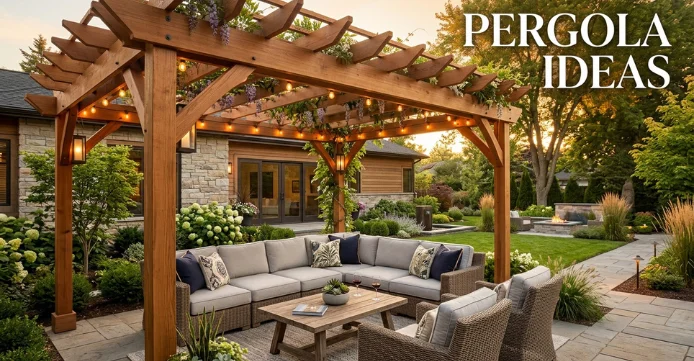
A well-planned pergola can turn an ordinary garden into a comfortable outdoor living space. It can provide shade, privacy, structure, and somewhere inviting to relax or entertain. These pergola ideas cover modern, traditional, small, planted, and weather-conscious designs for UK homes.
A good design should suit how you already use your garden. Before choosing materials, consider sunlight, privacy, available floor space, and wind exposure. The right approach can make even a compact patio feel more purposeful.
Pergola Ideas at a Glance
| Idea | Best for | Key feature |
|---|---|---|
| Timber frame | Traditional gardens | Warm, natural appearance |
| Aluminium frame | Modern gardens | Low-maintenance finish |
| Louvred roof | Changeable weather | Adjustable shade and shelter |
| Wall-mounted design | Small patios | Saves valuable floor space |
| Climbing plants | Cottage gardens | Natural shade and colour |
| Privacy screens | Overlooked plots | More secluded seating |
| Outdoor dining | Entertaining | Defined eating area |
| Corner design | Compact gardens | Uses awkward space |
| Festoon lighting | Evening use | Warm ambient light |
| Retractable canopy | Flexible shade | Cover when required |
Quick answer: The most useful designs combine an appropriately sized frame with shade, comfortable furniture, lighting, and selective screening. UK gardens also benefit from flexible weather protection, while planting can soften the structure and provide seasonal colour.
1. Create a Green Canopy With Climbing Plants
Climbing plants can turn a simple frame into a leafy garden feature. They provide softer shade and connect the structure to surrounding borders. Flowering varieties can also add scent and colour around seating areas.
The RHS recommends vigorous climbers such as rambling roses, clematis, honeysuckle, jasmine, grapes, and wisteria for these structures. Strong plants need suitable support as they grow heavier. Regular training also helps keep growth distributed across the overhead beams.
Choose plants according to your garden’s aspect and available maintenance time. A sunny position may suit roses, grapes, or jasmine particularly well. Check mature size before planting anything vigorous beside a smaller structure.
2. Choose a Modern Aluminium Design
Aluminium works particularly well in contemporary gardens with clean paving and simple planting. Dark grey or black frames can provide contrast against green foliage. Their slim lines also suit modern extensions and recently built homes.
Metal designs usually need less routine treatment than traditional timber structures. This makes them attractive when you have limited time for garden maintenance. Pair the frame with restrained furniture rather than filling the area with accessories.
Repeat the frame colour elsewhere for a more connected scheme. Planters, window frames, furniture legs, or outdoor lights can carry the same tone. Small repetitions help the garden look planned rather than assembled gradually.
3. Add an Adjustable Louvred Roof
British weather makes flexible overhead cover particularly useful. Adjustable louvres can provide open sunshine, partial shade, or greater protection when conditions change. They suit homeowners who expect to use their outdoor seating regularly.
Positioning still matters because low sun and wind can enter through open sides. Watch your garden in the morning, afternoon, and evening before deciding where the seating goes. That simple exercise can prevent an expensive structure facing the wrong direction.
Also consider drainage when comparing roof systems. Rainwater needs somewhere sensible to go without soaking nearby doors or seating. Check the manufacturer’s installation requirements before preparing the base.
4. Extend the House With a Wall-Mounted Design
A wall-mounted frame can make the patio feel like an extension of an indoor room. It works especially well outside kitchens and dining areas. Keeping the two spaces visually connected can also encourage more frequent outdoor use.
Use similar colours or materials on both sides of the doors. For example, repeat indoor timber tones through furniture or planters outside. Consistent flooring colours can strengthen the connection without requiring identical surfaces.
Keep circulation space clear around doors and dining chairs. Furniture that technically fits may still make movement awkward. Measure chairs in their pulled-out position before fixing posts or choosing the final footprint.
5. Turn a Small Garden Corner Into a Seating Area
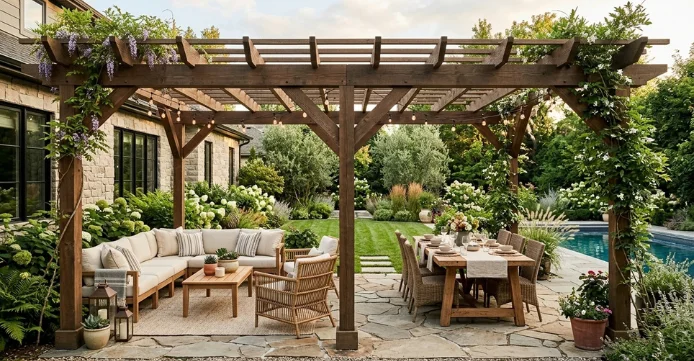
Compact gardens often contain corners that serve no clear purpose. A carefully scaled structure can turn that unused space into a dedicated seating zone. This leaves the centre of the garden open and easier to navigate.
Corner layouts work particularly well with built-in benches or compact outdoor sofas. Add one or two tall planters rather than surrounding the area with bulky furniture. Vertical planting adds interest without sacrificing much floor space.
Scale matters more than adding lots of features. An oversized frame can dominate a short garden and block useful daylight. Mark the proposed footprint with string before buying anything.
6. Add Privacy Without Enclosing Every Side
Overlooking is common in terraced homes and many newer developments. You rarely need solid screening around the entire seating area. Blocking the main sightline often provides enough privacy while preserving daylight.
Slatted timber panels can filter views without creating a heavy wall. Trellis with climbers offers a softer alternative but takes time to mature. Outdoor curtains can provide flexible screening when permanent panels aren’t desirable.
Sit where your furniture will go before deciding where screening belongs. Look towards neighbouring windows and identify the specific problem angles. Targeting those views usually produces a lighter and more attractive result.
7. Create an Outdoor Dining Room
Positioning the structure near the kitchen can make outdoor dining considerably easier. Plates, drinks, and food travel a shorter distance from preparation areas. The arrangement also helps the patio function as another entertaining zone.
Allow enough space around the table for chairs and movement. A narrow gap quickly becomes irritating when several people are seated. Measure your furniture before deciding the final dimensions.
Lighting should illuminate the table without producing harsh glare. Warm overhead lighting often works better than one powerful floodlight. Add lower lights near paths or steps for safer movement after dark.
8. Use Timber for a Softer Traditional Look
Timber naturally complements cottage gardens, older properties, and informal planting schemes. Its texture works particularly well beside brick, gravel, natural stone, and established borders. You can also paint or stain it when you want a stronger colour.
Durability depends heavily on timber choice and construction. The RHS highlights larch, Douglas fir, and oak as suitable options. Posts and beams must also be strong enough for wind and mature climbing plants.
Think about future maintenance before covering every surface with greenery. You will eventually need access for inspections or treatment. Leaving accessible sections can make routine care considerably easier.
9. Use a Retractable Fabric Canopy
An open frame provides structure but doesn’t guarantee dependable shade. A retractable canopy gives you more control during bright summer afternoons. You can also open it when you want maximum daylight.
Choose outdoor fabric designed for its intended exposure and follow its care instructions. Retractable material may need securing or removing during severe weather. The mechanism should remain easy to reach from the seating area.
Colour also changes the atmosphere beneath the canopy. Pale fabrics feel airy and reflect more light into the space. Deeper shades can make a large seating area feel more intimate.
10. Bring in Warm Evening Lighting
Lighting can extend the useful hours of an outdoor seating area. Festoon lights create a relaxed atmosphere and work particularly well across overhead beams. Small wall or post lights can provide more focused illumination.
Avoid trying to illuminate the whole garden from one fitting. Layered lighting produces depth and makes individual areas easier to use. Paths, steps, dining surfaces, and planting can each receive different light levels.
Solar fittings are useful where wiring would be inconvenient. Mains-powered outdoor lighting can provide more consistent performance through darker months. Any electrical installation should suit outdoor conditions.
11. Combine the Frame With a Deck or Patio
The surface underneath helps define the area as a distinct outdoor room. Timber decking offers a warmer look, while porcelain or stone can create a cleaner, contemporary finish. Gravel offers a softer option for informal gardens.
Think about drainage before installing both the structure and its floor. Water should move away from the house and avoid pooling around posts. Also consider slippery surfaces in shaded or damp locations.
For compact plots, avoid dividing the floor into too many materials. One consistent surface can make a smaller area feel calmer and larger. DecoHome’s budget small garden guidance also supports prioritising the surfaces people notice and use most.
12. Build Around a Relaxed Lounge Area
Not every covered area needs a dining table. Deep chairs, a compact sofa, and a low table can create a quieter place for reading. Outdoor cushions and an appropriate rug can further soften hard landscaping.
Choose furniture proportions according to the available floor area. Oversized lounge sets can quickly consume narrow patios. Slim arms and raised legs can make furniture appear lighter.
Leave one clear route through the seating zone. This becomes especially important when the structure sits between the house and garden. Good circulation makes an outdoor area feel comfortable, not crowded.
13. Use the Structure to Divide a Long Garden
Long gardens can feel like corridors when everything follows the same straight sightline. An overhead frame creates a visual pause and separates one activity from another. It can divide dining, lawn, planting, or relaxation zones.
Position it where the garden naturally changes purpose. Placing it halfway down the plot can create a destination away from the house. A bench underneath gives the far end a reason to be used.
Avoid filling every zone with furniture or decoration. Open areas between features help each section remain distinct. This approach can make a modest plot feel more varied.
14. Design Around UK Weather
Shade matters in hot weather, but rain and wind affect garden use year-round. Think about the prevailing wind direction before choosing open sides or screens. Flexible protection often works better than permanently closing every side.
The RHS has highlighted pergolas as one option for creating useful garden shade during hotter conditions. Planting and woven overhead materials can provide softer alternatives to solid roofing. Your chosen solution should still suit the structure’s load limits.
Remember that a sheltered outdoor space remains outdoors. Fabrics, furniture, lights, and heaters must suit their intended conditions. Store vulnerable accessories when severe weather is expected.
15. Keep the Design Simple
The strongest garden schemes usually repeat a limited selection of colours and materials. Pick a frame finish, flooring material, planting style, and furniture palette that work together. Too many competing finishes can make a compact space feel busy.
Use planting to soften corners rather than covering every post. Leave enough open structure to preserve light and views across the garden. One focal feature often has more impact than several decorative additions.
DecoHome’s guidance on functional outdoor spaces follows a similar principle. Start with how people need to move and use the area. Decoration becomes easier once those practical decisions are settled.
Do Pergolas Need Planning Permission in the UK?
Planning requirements depend on the property, structure, location, and UK nation involved. In England, qualifying garden structures may fall within permitted development rights. Restrictions and special circumstances can still change what is allowed.
Listed buildings and properties with restricted development rights need extra care. Different planning systems also apply in Scotland, Wales, and Northern Ireland. Check with your local planning authority before starting work if you’re unsure.
Plan before ordering a large fixed structure. Confirming requirements early can prevent costly alterations later. This is particularly important near boundaries or protected properties.
How to Choose the Right Design
Start by deciding what problem the new garden feature should solve. Shade, privacy, dining, planting, and shelter lead to different designs. Let your intended use guide the purchase, not appearance alone.
Next, measure the usable area and observe sunlight throughout the day. Mark the proposed footprint and place existing furniture inside it. This simple test reveals whether circulation and proportions work.
Finally, consider maintenance and how the garden may change. Plants grow, furniture gets replaced, and family needs evolve. A flexible layout is more likely to remain useful.
Frequently Asked Questions About Pergola Ideas
What are the best pergola ideas for a small garden?
Wall-mounted, corner, and compact freestanding designs can all work in smaller gardens. Keeping most sides open helps preserve long sightlines and daylight. Use vertical planting and appropriately scaled furniture to conserve floor space.
What plants grow well over a pergola in the UK?
The RHS recommends several vigorous climbers, including rambling roses, clematis, honeysuckle, jasmine, grapes, and wisteria. The right choice depends on aspect, soil, available space, and pruning needs. Always check mature growth before planting beside a lightweight frame.
How can I make a pergola more private?
Start by identifying the exact direction of unwanted overlooking. Add a screen, trellis, curtain, or planting only where it blocks that view. Selective screening usually preserves more light than enclosing every side.
What can I put underneath a pergola?
Common choices include dining tables, lounge seating, benches, planters, and outdoor kitchens. The best option depends on available space and proximity to the house. Always preserve comfortable circulation around furniture and access points.
Are wooden or aluminium designs better?
Neither material suits every garden. Timber offers warmth and suits natural planting, while aluminium can provide a cleaner, lower-maintenance appearance. Compare upkeep, budget, style, and weather exposure before deciding.
Make Your Pergola Work for Your Garden
The most successful design starts with function rather than decoration. Decide where you need shade, privacy, seating, or a stronger visual focal point. Then choose a structure and materials that solve those needs.
Keep scale appropriate and leave enough room for movement. Add planting, lighting, and screening after the basic layout works. That order produces a garden feature that looks considered and remains useful.
For more inspiration, explore DecoHome’s gardening content and its budget small garden ideas. You can also review its advice on creating functional outdoor spaces. Those guides can help you plan the wider garden around your new seating area.