
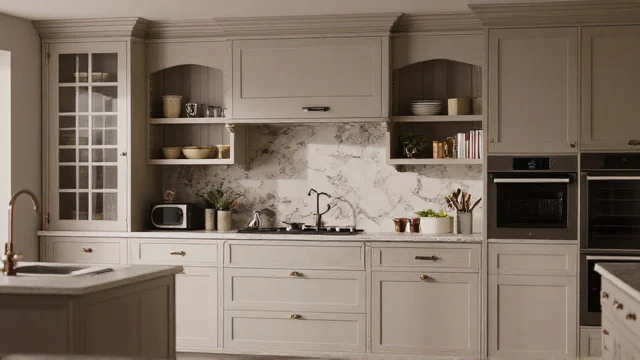
Kitchen cupboard handles can change how your kitchen looks and feels without replacing the cabinets. The right hardware should suit your doors, feel comfortable, and cope with regular daily use. It should also complement worktops, taps, appliances, and other visible fittings. Also worth reading: Kitchen Paint.
Choosing well comes down to three main points: style, size, and finish. Bar handles offer a clean contemporary look, while cup pulls and knobs suit classic kitchens. Before buying replacements, measure the distance between the existing fixing holes rather than measuring only the handle’s total length.
Quick answer: Choose handles that suit your cabinet style, door proportions, and preferred grip. Measure existing screw-hole centres in millimetres before ordering replacements. Bar pulls suit many modern kitchens, while cup handles and knobs work well with traditional designs. Match the finish with nearby hardware for a more coordinated result.
| Factor | What to consider | Useful starting point |
|---|---|---|
| Style | Cabinet design and room character | Bar, cup, knob, D-handle or edge pull |
| Size | Door width and existing fixing holes | Measure hole centres in millimetres |
| Finish | Cabinets, taps and appliances | Black, brass, nickel, chrome or steel |
| Grip | Comfort during everyday use | Pulls give more gripping area than small knobs |
| Proportion | Size of doors and drawers | Larger fronts often suit longer pulls |
| Replacement | Existing drilled holes | Match centres where possible |
Why Cupboard Handles Make Such a Difference

Handles occupy little physical space, yet they appear across almost every cabinet and drawer. Repetition gives them considerable visual influence within a fitted kitchen. Changing the hardware can therefore alter the room’s character without replacing sound doors.
They also affect how comfortably you use the kitchen. A handle needs enough space for your fingers and enough leverage for its cabinet. Pull handles can provide a larger gripping area than compact knobs, which may help on heavier doors and drawers.
Think about practical needs before choosing a finish from photographs. Open several cabinets and notice how you naturally grip them. A beautiful fitting becomes frustrating if its shape feels awkward several times each day.
Kitchen Cupboard Handles Compared by Style
Several handle types dominate UK kitchens, but they don’t create the same effect. Your cabinet door design gives you a useful starting point. The table below compares the main options for different kitchen styles.
| Handle style | Works particularly well with | Main advantage | Possible drawback |
|---|---|---|---|
| Bar handles | Modern and transitional kitchens | Easy grip and many size choices | Long styles can dominate small doors |
| Cup handles | Shaker and country kitchens | Traditional character | Usually suits drawers better than every door |
| Knobs | Traditional and mixed schemes | Compact and simple | Less gripping area |
| D-handles | Modern or transitional cabinets | Comfortable curved grip | More visible than minimalist options |
| Edge pulls | Minimal contemporary kitchens | Clean, understated appearance | Positioning needs careful planning |
| T-bars | Modern cabinets | Compact contemporary detail | Small versions offer less gripping space |
Bar handles
Bar handles are among the easiest options to use across different cabinet sizes. Their straight shape suits slab doors, modern kitchens, and many transitional designs. Longer versions also work well on wide pan drawers where a small fitting could look undersized.
They are available in numerous lengths and finishes across the UK market. Common options include black, brass-toned, nickel, chrome, and steel-style finishes. This variety makes bar handles particularly useful when coordinating several visible fittings.
Pros
- Large gripping area
- Works across doors and drawers
- Available in many lengths
- Easy to coordinate throughout a kitchen
Cons
- Oversized versions can overwhelm narrow doors
- Two fixing points make replacement measurements important
Cup handles
Cup pulls have a curved shell that you grip from underneath. They are strongly associated with Shaker, farmhouse, and traditional cabinet styles. Brass, bronze, pewter, and other aged finishes can reinforce this classic appearance.
They work especially well on drawers because their horizontal form follows the drawer front. You can pair them with matching knobs on cupboard doors. This combination adds variation while keeping the hardware visually connected.
Pros
- Strong traditional character
- Comfortable grip from underneath
- Pairs naturally with Shaker cabinetry
- Works well with matching knobs
Cons
- Less suited to some minimalist kitchens
- The recessed underside needs regular cleaning
Cabinet knobs
Knobs use one fixing point, making them a simple hardware choice. Their small scale suits wall cupboards and compact cabinet doors particularly well. Round, square, and T-shaped versions give you plenty of design flexibility.
Their main limitation is grip size. A tiny knob may feel less comfortable on a heavy drawer or tall cabinet. Consider a larger pull where extra leverage would make opening the unit easier.
Pros
- Only one fixing point
- Compact appearance
- Suitable for many traditional designs
- Easy to combine with drawer pulls
Cons
- Smaller gripping area
- Can look undersized on wide drawers
Edge and finger pulls
Edge pulls attach discreetly around the edge of a cabinet front. They are useful when you want visible hardware without interrupting a minimalist design. Their reduced visual weight suits flat slab doors especially well.
Check how much gripping area a design provides before buying a full set. A shallow edge pull may look neat but feel less comfortable for some users. Testing one sample first can prevent an expensive whole-kitchen mistake.
How to Choose the Right Kitchen Cupboard Handles
Start with your cabinet style, then narrow the choice using comfort and proportion. A Shaker kitchen naturally supports knobs and cup pulls, while flat slab doors often suit bars or edge pulls. These aren’t fixed rules, but they provide a dependable starting point.
Next, consider repeated shapes elsewhere in the room. Curved handles can echo rounded taps, lights, and furniture details. Straight pulls can reinforce square worktops, linear cabinetry, and other geometric features.
Finish by testing the handle physically where possible. Check whether your fingers fit comfortably behind it and whether any edges feel unpleasant. A sample also lets you view the finish against your cabinets under your own lighting.
What Size Kitchen Handles Do You Need?
Handle sizing can cause confusion because the advertised measurement may refer to hole centres rather than total length. Hole-centre measurement is the distance from the centre of one fixing screw to the other. Always check which measurement a retailer provides before placing an order.
Common UK hole-centre sizes include 96mm, 128mm and 160mm. Longer 192mm, 224mm, 256mm and 320mm options are also available for wider fronts and larger units. Exact availability depends on the chosen handle range.
If you’re replacing existing hardware, measure from the centre of one screw hole to the centre of the next. Don’t measure from the outside edges of the holes. Matching the existing centres can save you from drilling fresh holes or repairing old ones.
The one-third rule
The one-third rule suggests choosing a pull around one-third the width of the drawer or cabinet front. Treat this measurement as a visual starting point rather than a technical requirement. Cabinet proportions and the intended design still matter.
A longer statement handle may suit an intentionally bold kitchen. A smaller fitting can work when the goal is quiet, understated hardware. Place a sample against the actual door before ordering a complete set.
Choosing the Best Finish for Your Cabinets
Colour and finish determine whether your handles blend into the cabinetry or create contrast. Matt black creates a strong outline on pale doors, while brass-toned finishes introduce warmth. Chrome, nickel, and steel-style finishes can create a cooler, more neutral effect.
Look beyond the cabinet colour when making this decision. Consider your tap, sink, appliances, lighting, and nearby door furniture. You don’t need every metal to match, but repeated finishes can make the design feel more deliberate.
If changing the cabinet colour is part of the same project, DecoHome’s guide to kitchen cupboard paint and finishes explains suitable finishes for common UK cabinet materials. Pairing new hardware with freshly finished doors can create a much larger visual change. The two choices should therefore be planned together rather than separately.
Matt black
Black hardware can create strong contrast against white, cream, and light wood cabinets. It can also sit quietly against darker cabinetry when you want less contrast. Its simple appearance works across both contemporary and some traditional designs.
Fingerprints and cooking residue can show differently depending on the surface texture. Examine a sample in natural and artificial light before committing. The same black finish can look different under warm and cool lighting.
Brass and gold tones
Brass-toned handles bring warmth to painted cabinets and natural materials. They are often paired with navy, green, cream, and darker cabinetry. Their character also suits Shaker doors and many contemporary schemes.
Pay attention to the exact finish description. Polished, satin, brushed, antique, and aged brass don’t look identical. Choose one family and repeat it deliberately if consistency matters to your design.
Chrome, nickel and steel tones
Cool metallic finishes are flexible choices for many UK kitchens. They can coordinate easily with sinks, appliances, and other stainless or chrome details. Brushed surfaces often create a softer appearance than highly polished ones.
The practical differences matter too. Highly reflective hardware may show fingerprints more readily. A satin or brushed texture can be easier to live with in a busy family kitchen.
Should All Kitchen Handles Match?
Using one handle family throughout the room is the simplest approach. It gives cupboards and drawers a consistent rhythm. You can still use different lengths where wider fronts need larger hardware.
Mixing styles can also work when there is a clear system. For example, use knobs on cabinet doors and cup pulls on drawers. Keep the same finish across both to create a visual connection.
Avoid mixing several unrelated shapes, finishes, and textures without a plan. The kitchen already contains many visible materials and appliances. Hardware should help organise the design rather than introduce unnecessary visual noise.
Replacing Existing Handles Without Unwanted Holes
Measure your existing fixing centres before shopping for replacements. Choosing new handles with the same centres lets you use the existing holes. This is usually the simplest option for an established kitchen.
Changing from a two-hole pull to a single knob may leave one old hole visible. Moving to a different centre measurement can create the same problem. Some broad backplate designs can cover previous holes, depending on their position.
Create a simple paper or cardboard template before drilling fresh cabinet doors. Mark the screw positions carefully and check neighbouring doors before making permanent holes. Consistent positioning matters because small alignment errors become obvious across a row of cupboards.
Think About Storage as Well as Appearance
Handles become especially important on cupboards and drawers you open throughout the day. Frequently used pan drawers, bins, food cupboards, and cleaning storage need hardware that feels comfortable under repeated use. Large drawers can benefit from a pull that gives your hand enough room and leverage.
If you’re reconsidering the cabinetry itself, DecoHome’s advice on functional storage and built-in additions covers how fitted storage can reduce clutter and improve everyday organisation. Good hardware complements that planning because storage is only useful when it remains easy to access. Consider function before choosing a handle purely for its appearance.
A kitchen used by several people may also need different practical considerations. Think about who opens the cupboards and whether small knobs provide enough grip. Comfortable hardware can be more valuable than following a specific design trend.
A Practical Buying Checklist
Don’t choose hardware from appearance alone. A few checks before ordering can prevent mismatched holes, uncomfortable grips, and poor proportions. Use this checklist before committing to a complete set.
- Measure existing hole centres in millimetres if you’re replacing two-point handles.
- Check the cabinet style and choose hardware that supports its character.
- Consider door and drawer proportions before selecting handle length.
- Test the grip if samples or individual handles are available.
- Compare finishes in your kitchen’s lighting rather than relying only on screen colours.
- Check nearby metal finishes on taps, appliances, lights, and furniture.
- Confirm fixing requirements before drilling new cabinet fronts.
Ordering one sample can be useful when a retailer allows individual purchases. Hold it against several doors and drawers before buying the remaining quantity. This gives you a better sense of colour, scale, texture, and comfort.
Common Mistakes to Avoid
The first common mistake is ordering by total handle length instead of fixing centres. A replacement can look similar online yet fail to line up with the existing holes. Measure before buying and check the retailer’s technical dimensions carefully.
Another mistake is choosing every handle at the same physical length without considering cabinet proportions. Wide drawers can often carry longer pulls comfortably. Narrow doors may need smaller hardware to avoid looking crowded.
Finally, don’t ignore grip comfort. Kitchens are working spaces, and handles receive constant contact. A design should still feel comfortable after the novelty of its appearance has passed.
Are New Handles Worth It for a Kitchen Refresh?
Replacing handles can be a practical option when cabinet doors remain sound but look dated. New hardware changes repeated visual details across the entire room. You can therefore create a noticeable update without replacing every cupboard front.
Hardware can also form part of a broader refurbishment. DecoHome’s article on transformative home upgrades discusses how new kitchen hardware, storage, lighting, and other finishes can contribute to a remodel. You can use that wider approach when handles alone won’t achieve the change you want.
Before buying, calculate the total number of pieces required. Include cupboards, drawers, integrated appliance fronts, and any matching utility-room cabinetry. Keeping one or two spare handles may also help if a matching range later changes or disappears.
Frequently Asked Questions About Kitchen Cupboard Handles
What are the most common kitchen cupboard handle sizes?
Common UK hole-centre measurements include 96mm, 128mm and 160mm. Longer options such as 192mm and 320mm are often used for wider drawers or larger units. Always check the centre-to-centre measurement rather than assuming the advertised size means total length.
Your existing drilling pattern should take priority when you’re replacing hardware. Matching it can reduce extra drilling and repair work. New cabinets give you more freedom to select size according to proportion.
How do I measure replacement handles?
Open the cabinet and locate the two fixing screws. Measure from the centre of one screw hole to the centre of the other in millimetres. That figure is the hole-centre measurement you need to compare with a replacement.
Also check the total dimensions before ordering. Two handles can share the same fixing centres but have different overall lengths. Their visual scale can therefore differ once fitted.
What handles look good on Shaker kitchens?
Cup pulls and knobs are established choices for Shaker cabinetry. Their shapes complement the framed construction and traditional character of Shaker-style doors. Bar and D-handles can also create a more contemporary interpretation.
Choose according to the wider room rather than the cabinet door alone. Modern lighting and worktops may support a cleaner pull. Traditional fittings may make cups and knobs feel more coherent.
Are knobs or handles better for kitchen cabinets?
Neither option is automatically better for every cabinet. Knobs are compact and require one fixing, while pulls provide a larger gripping area. Larger drawers and heavier doors can benefit from the added leverage of a pull.
Many kitchens combine the two successfully. Knobs can sit on cupboard doors while pulls handle larger drawers. Using one finish helps the combination feel intentional.
Do kitchen handles need to match the tap?
They don’t need to match exactly. Coordinating finishes can create a calmer, more consistent appearance, but deliberate mixed-metal schemes can also work. Repeating each finish elsewhere helps the combination look purposeful.
Consider colour temperature as well as the metal name. Warm brass and bronze tones create a different effect from cool chrome and steel. Samples make these relationships easier to judge at home.
What is the easiest way to update kitchen cupboards?
Changing kitchen cupboard handles is one of the simpler cosmetic updates when existing doors remain in good condition. It requires far less intervention than replacing the entire fitted kitchen. Matching existing fixing centres can make the job easier still.
Start by measuring every handle type already fitted. Then compare styles, finishes, and proportions before ordering a full set. Careful preparation gives the finished update a more consistent appearance.
Give Your Kitchen the Right Finishing Detail
Good cabinet hardware balances appearance with daily usability. Choose a style that suits the cabinetry, measure fixing centres accurately, and select a finish that works with the room’s other details. Those decisions matter more than following a short-lived trend.
If you’re planning a kitchen refresh, start by photographing your cabinets and recording every existing handle measurement. Compare a few samples against the doors before committing to the full quantity. A small amount of preparation can make the final result look far more considered.