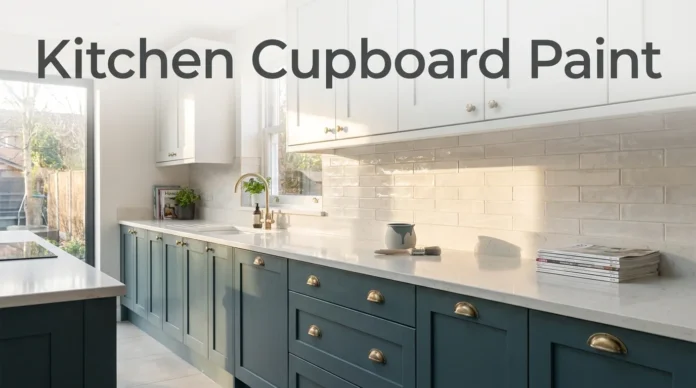
For most UK kitchens, the best kitchen cupboard paint is a specialist water-based cabinet paint in a satin finish, applied over a compatible primer. Expect to spend roughly £60 to £180 on materials for a typical 15 to 20 door kitchen, budget a full weekend for preparation and a second for painting, and allow up to three weeks of gentle handling before the coating reaches full hardness.
The single biggest predictor of whether the job lasts five years or five months is not the tin you buy. It is whether you removed the grease and used the right primer for your door material. A £45 premium topcoat over unwashed melamine will peel; a £22 supermarket cabinet paint over properly degreased, keyed and primed doors will hold up fine. This guide covers the finishes, the primers, realistic costs, the step-by-step method, and the mistakes that cause peeling — all with UK products, prices and conditions in mind.
| Quick decision | Best starting point |
|---|---|
| Best all-round finish | Specialist water-based satin cabinet paint |
| Softer, more traditional look | Durable eggshell |
| Higher sheen, easiest wiping | Satinwood or acrylic gloss |
| Laminate, melamine or vinyl-wrapped doors | Adhesion primer such as a shellac or bonding primer, then a compatible topcoat |
| Bare or exposed MDF edges | MDF-specific primer to seal the absorbent edge first |
| Most important single step | Degrease thoroughly with sugar soap or a degreaser |
| Application | 4in foam or microfibre roller on flats, 1.5in synthetic brush on mouldings |
| Typical materials cost | £60–£180 for a 15–20 door kitchen |
| Time to full cure | 7–21 days depending on product; touch dry is not cured |
Identify Your Door Material First
Everything downstream depends on what the doors are actually made of, and a surprising number of people get this wrong. Open a door and look at the inside edge.
- Solid or veneered timber. Visible grain that continues around the edge. The most forgiving substrate. Clean, sand with 180–240 grit, prime if bare or if you are making a big colour change, and paint.
- Painted MDF (typical Shaker doors). A dense, uniform brown core with no grain. Paints beautifully on the face, but exposed or damaged edges drink paint. Seal those edges with an MDF primer or a coat of thinned primer before anything else.
- Laminate or melamine faced chipboard. A hard plastic surface bonded to a speckled chip core. Very smooth and non-porous, and the most common cause of peeling. Requires degreasing, a light key with 240 grit, and a genuine adhesion primer.
- Vinyl-wrapped MDF. A thermoformed plastic film, usually with a slightly soft feel and a seam at the back edge. Paintable, but if the wrap is lifting or bubbling anywhere, paint will not fix it — that door needs replacing.
- High-gloss acrylic or lacquered doors. Mirror-like. Hardest of the lot. Needs aggressive degreasing, a thorough key, and a bonding primer; many decorators would spray rather than brush these.
If the existing coating is chipping, flaking or peeling anywhere, sanding alone rarely leaves a sound base. Our guide to choosing paint strippers for different surfaces covers the safer options for taking a failed finish back to something you can build on.

Kitchen Cupboard Paint Types Compared
| Paint or finish | Best for | Typical UK price | Main advantages | Main drawbacks |
|---|---|---|---|---|
| Specialist water-based cabinet satin | Most household kitchens | £20–£35 per 750ml | Wipeable, low odour, dries in 2–4 hours, self-levelling | Preparation still decides the outcome |
| Water-based satinwood | Timber and primed surfaces | £18–£30 per 750ml | Widely stocked, practical sheen, soap-and-water cleanup | Check laminate compatibility before buying |
| Durable eggshell | Shaker doors, period and country schemes | £25–£45 per 750ml | Lower sheen, hides minor surface flaws well | Some products need a longer cure and a dedicated primer |
| Multi-surface hybrid paint | Mixed-material kitchens, tiles, laminate | £25–£40 per litre | Often self-priming on difficult surfaces, very tough | Fewer colours; more expensive per square metre |
| Solvent-based satin or gloss | High-wear timber where hardness matters most | £20–£35 per 750ml | Hardest film, excellent levelling | Yellows over time, strong odour, white spirit cleanup, 16h+ recoat |
| Chalk or mineral furniture paint | Decorative makeovers, freestanding pieces | £18–£30 per 500ml | Minimal prep, huge colour range, matt finish | Needs a wax or lacquer topcoat; marks more easily near hobs and sinks |
Where the UK market has genuinely improved is the specialist cabinet category. Products designed specifically for kitchen units — from Rust-Oleum, Johnstone’s, Dulux, Frenchic and others — now combine reasonable open time with a hard, wipe-clean film, and several are formulated to go directly onto laminate after cleaning and keying. Read the technical data sheet, not just the front of the tin: the substrate list on the back is the part that matters.
Our recommendation
For a standard DIY refresh on painted timber or MDF doors, a specialist water-based satin is the strongest starting point. It balances cleanability against how much it flatters an imperfect surface, it recoats the same day, and it does not yellow the way oil-based whites do over a few years above a hob.
Choose eggshell if you have Shaker doors and want a softer, more traditional look. Choose satinwood or gloss if your priority is the easiest possible wiping and you are confident your preparation is flawless, because higher sheen magnifies every dent and brush mark. Be cautious with chalk-style matt paints on the doors nearest the sink, hob and bin — they look superb and mark quickly.
Primers: The Part People Skip and Regret
Primer is not an optional upsell. It is the mechanical and chemical bridge between a non-porous factory finish and your topcoat.
- Shellac-based primer is the gold standard for adhesion on glossy laminate, melamine, and vinyl wrap. It also blocks tannin bleed from oak and knots, and stains from water damage. It dries in under an hour but needs methylated spirit for cleanup and has a strong smell — ventilate properly.
- Water-based bonding primer is a lower-odour alternative that grips well on most previously painted and lightly keyed surfaces. Slightly less bulletproof on high gloss.
- MDF primer is thicker and formulated to seal absorbent cut edges so they do not swell and go furry.
- Self-priming systems. Some cabinet paints claim no separate primer is needed on laminate. They can work, but only if you follow their cleaning and abrasion instructions exactly. On high-gloss doors, a separate primer is still the safer choice.
One tin of primer typically covers 10–12 m² per litre, which is comfortably enough for a mid-sized kitchen’s worth of doors at £15–£30.
What It Costs: Painting Versus the Alternatives
| Option | Typical UK cost (2026) | Time | Best when |
|---|---|---|---|
| DIY painting, materials only | £60–£180 | 2 weekends | Carcasses and hinges are sound and you have the time |
| Professional hand-painting | £1,000–£2,800 | 3–6 days on site | You want a factory-neat result without spray equipment |
| Professional spray respray | £1,500–£4,000 | 4–8 days, often off site | High-gloss or slab doors where brush marks are unacceptable |
| Replacement doors and drawer fronts only | £500–£2,000 | 1–2 days fitting | Doors are swollen, wrap is lifting, or you want a new style |
| Full new kitchen | £6,000–£20,000+ | 2–5 weeks | The layout itself is wrong or the carcasses have failed |
A DIY paint job typically saves 90 per cent or more against a new kitchen while delivering perhaps 60 per cent of the visual transformation. That is excellent value when the units work. It is money wasted when they do not. Before you buy a single tin, it is worth comparing the project honestly against new kitchen costs and budget-friendly upgrades so you know which side of that line you sit on.
What you will actually need to buy
- Sugar soap or a dedicated kitchen degreaser — £3–£8
- Abrasive pads and 180/240 grit sandpaper — £6–£12
- Adhesion or shellac primer, 750ml–1L — £15–£30
- Cabinet topcoat, 750ml–2L depending on kitchen size — £25–£70
- Two 4in foam or microfibre gloss rollers plus trays — £10–£15
- One good 1.5in synthetic brush — £8–£15
- Low-tack masking tape, dust sheets, filler, tack cloths — £15–£25
The Step-by-Step Method
- Photograph and label everything. Take a picture of the kitchen, then number each door and its cabinet with masking tape inside the frame. Bag the hinges and handles for each door separately.
- Remove the doors and drawer fronts. Painting them flat, off the units, is what separates a neat job from a drippy one. Rest them on blocks or paint pyramids so air circulates.
- Degrease twice. Sugar soap solution, then a clean water rinse, then dry. Pay disproportionate attention to the areas around handles, above the hob and either side of the bin — that is where invisible cooking film sits and where peeling always starts.
- Fill and repair. Two-part wood filler for dents and chipped edges; let it cure fully, then sand flush.
- Key the surface. 180–240 grit on painted timber, 240 grit or a fine abrasive pad on laminate. You are dulling the sheen, not removing material. Vacuum, then wipe with a tack cloth.
- Prime. One thin, even coat. Sand very lightly with 320 grit once dry to knock back any nibs.
- Topcoat, thinly, at least twice. Do the door edges and any mouldings with the brush first, then immediately roller the flat areas to lay it off. Two thin coats beat one thick one every time — thick coats sag, trap solvent and stay soft.
- Leave the doors flat for 24–48 hours before rehanging, and do not stack them face to face.
- Treat the kitchen gently for two to three weeks. Wipe with a damp cloth only, avoid harsh cleaners, and do not let doors bang shut. Soft-close dampers are worth fitting at this stage if you do not have them.
Choosing a Colour That Still Works in Six Months
Colour should be led by what you are keeping, not by what is trending. Lay the worktop offcut, a flooring sample and a splashback tile side by side and pick from there.
- Warm whites and soft off-whites work when the worktop is busy — heavily veined quartz, patterned laminate, or reclaimed timber.
- Muted sage and olive greens remain the most forgiving colour family in British kitchens, sitting comfortably with oak, brass and both warm and cool stone.
- Deep blues and inky navies look sharp with brushed brass or matt black handles but need decent lighting; in a north-facing galley kitchen they can close the room in.
- Charcoal and near-black read as expensive and show dust, fingerprints and limescale splashes more than any other choice. Best on lower units only.
- Two-tone — darker base units, lighter wall units — is the safest way to use a strong colour without committing the whole room to it.
Buy a tester, paint an A4 offcut of MDF with two coats, and move it around the kitchen for two days. Look at it in morning daylight, in grey afternoon light, and under your actual kitchen lighting at night. Undercabinet LEDs in particular shift colours noticeably towards cool.
Common Mistakes That Cause Peeling and a Rough Finish
- Leaving grease behind. The number one cause of failure. If you think you have degreased enough, do it once more around the handles.
- Skipping primer on laminate. The paint will look perfect for a fortnight and then lift in sheets at the door edges.
- Painting too thickly. Runs, sags, a soft film that never fully hardens, and fingerprints weeks later.
- Rehanging too early. Touch dry is not cured. Doors rehung after four hours often stick to the frame and tear the film when opened.
- Using ordinary wall emulsion. Matt emulsion has no scrub resistance and no moisture tolerance; it will mark from the first wipe.
- Painting in the wrong conditions. Below about 10°C or in high humidity, water-based paints do not coalesce properly. An unheated garage in January is a bad workshop.
- Ignoring the hinges and handles. New brushed brass or matt black handles cost £3–£8 each and change the look more than most people expect. Budget for them.
When Painting Is the Wrong Answer
Repainting is a cosmetic fix. It will not correct a layout that does not work, water-swollen carcass panels beneath the sink, hinges that have torn out of chipboard, or a vinyl wrap that has already delaminated. If more than a couple of doors are physically damaged, replacement doors on the existing carcasses usually give a better result for the money. If the carcasses themselves are soft, sagging or blown, you are past the point where any surface treatment helps.
For wider renovation planning, appliance choices and related projects, our UK kitchen section is a useful next stop.
Give Sound Cupboards a Fresh Start
If the units are structurally sound and the layout still works for how you cook, repainting is one of the highest-return jobs in the house: a few hundred pounds and two weekends against several thousand for a refit. Identify the door material honestly, buy a primer that matches it, degrease more thoroughly than feels necessary, apply thin coats, and give the finish the curing time the manufacturer asks for. Do those five things and the result will hold up to daily use for years.
Frequently Asked Questions
What is the best paint for kitchen cupboards in the UK?
A specialist water-based cabinet paint in satin is the best all-round choice for most UK kitchens. It gives a wipeable surface, recoats in two to four hours, has low odour, and does not yellow the way solvent-based whites do above a hob. Expect to pay £20–£35 for 750ml, which covers roughly 10–12 square metres per litre. The topcoat matters less than the primer beneath it, so match your primer to the door material — shellac or bonding primer for laminate and vinyl, MDF primer for exposed edges.
Do I need to sand kitchen cupboards before painting?
In almost all cases, yes, but only lightly. Use 180–240 grit on previously painted timber and 240 grit or a fine abrasive pad on laminate and melamine. The aim is to dull the sheen so the primer has something to grip, not to remove the existing finish. Some self-priming cabinet systems reduce the sanding needed, but none of them remove the need to degrease first — cleaning is the non-negotiable step, sanding is the near-universal one.
Can you paint laminate or vinyl-wrapped kitchen doors?
Yes, and it works well provided you follow the sequence. Degrease with sugar soap and rinse, key the surface with 240 grit, then apply an adhesion primer — a shellac-based primer is the most reliable on glossy laminate — before two thin topcoats. The one exception is a vinyl wrap that is already lifting, bubbling or peeling at the edges. Paint cannot re-bond a failed wrap, and those doors are better replaced.
How long do painted kitchen cupboards take to cure?
Touch dry is typically two to four hours for water-based cabinet paints, and recoating is usually possible the same day. Full cure, where the film reaches its final hardness and scratch resistance, takes considerably longer — commonly seven days and up to three weeks for some professional-grade coatings. During that window, wipe with a damp cloth only, avoid harsh cleaners, do not stack doors face to face, and stop doors from banging shut.
How much does it cost to paint kitchen cupboards?
Doing it yourself, materials for a typical 15 to 20 door kitchen come to roughly £60–£180, covering degreaser, abrasives, primer, topcoat, rollers and brushes. Professional hand-painting generally runs £1,000–£2,800 depending on kitchen size and location, and a full off-site spray respray £1,500–£4,000. All three compare favourably with £6,000 or more for a new kitchen, provided the existing carcasses are sound.
How many coats of paint do kitchen cupboards need?
Plan on one coat of primer plus two thin topcoats as standard. A third topcoat is often needed when going from a dark colour to a light one, when painting bare MDF edges, or with some deep pigments such as strong greens and blues that have lower opacity. Always favour several thin coats over one thick one: thick coats sag, trap solvent, cure slowly and stay soft enough to fingerprint for weeks.