
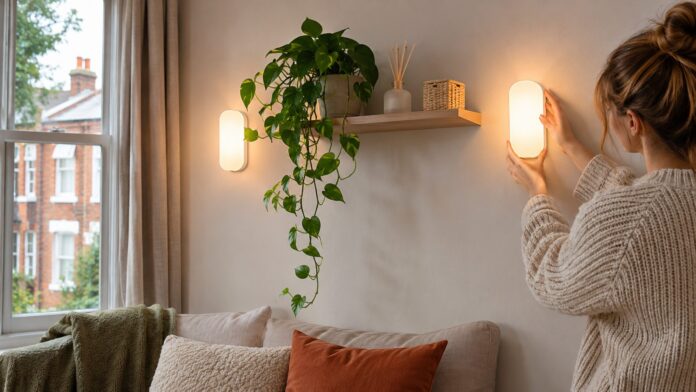
Stick on wall lights can add useful lighting without chasing cables through plaster or drilling permanent holes. They suit rented homes, compact rooms, dark hallways, bedrooms, and spaces with limited electrical points. The right model can provide practical light while keeping installation simple. Quick answer: No-drill lights work best when you match the fixing method to the wall surface. Choose rechargeable magnetic fittings for regular use and removable charging. Pick simple battery lights for occasional cupboards, hallways, or low-level night lighting.
Key Information at a Glance
| Feature | What to look for | Why it matters |
|---|---|---|
| Power | Rechargeable USB-C or replaceable batteries | Affects running convenience |
| Mounting | Adhesive plate, magnetic plate, or removable strips | Determines surface suitability |
| Light colour | Warm, neutral, or adjustable white | Changes the room’s atmosphere |
| Brightness | Lumens or adjustable output | Helps match the intended task |
| Controls | Touch, remote, motion sensor, or timer | Improves everyday usability |
| Direction | Fixed or adjustable head | Matters for reading and accent lighting |
| Charging | Easy-to-remove magnetic unit | Avoids awkward charging |
| Location | Dry indoor use unless rated otherwise | Helps prevent unsuitable installation |
Why No-Drill Lighting Has Become So Useful
Traditional wall fittings usually need wiring, screws, or both. That can be inconvenient when you rent or want a quick decorative update. Cordless fittings provide another option without committing to electrical alterations. They also help in rooms where furniture leaves little space for lamps. A mounted light keeps bedside tables and narrow consoles clear. Several light levels can improve a room, which is why a small cordless fitting often works alongside a main light. No-drill fittings work especially well as secondary lighting. They can brighten reading corners, pictures, shelves, stair areas, and darker walls. Most should complement the main room light rather than replace it.
Stick On Wall Lights: Which Type Should You Choose?
The main choices are rechargeable magnetic units, battery models, adhesive sconces, and motion-sensor lights. Each has different strengths for daily use. Your wall surface and intended purpose should guide the decision.
| Type | Best for | Main advantage | Main drawback |
|---|---|---|---|
| Rechargeable magnetic | Bedrooms and living rooms | Easy removal for charging | Needs regular charging |
| Replaceable battery | Cupboards and occasional lighting | Simple and inexpensive | Battery replacements add cost |
| Decorative adhesive sconce | Accent lighting | More traditional appearance | Heavier models need stronger fixing |
| Motion-sensor light | Hallways and stairs | Only operates when needed | Sensor placement matters |
| Adjustable reading light | Bedside or reading chair | Directs light where required | Narrower light spread |
Our recommendation: choose a rechargeable magnetic model for most everyday indoor uses. The removable light is easier to charge than a permanently attached unit. Adjustable brightness and colour temperature add useful flexibility. Simple battery models make more sense for occasional use. A cupboard or rarely used hallway does not need an elaborate rechargeable fitting. Choose the simplest option that solves the actual lighting problem.
Adhesive or Magnetic Mounting?
An adhesive fitting normally uses a sticky pad or strip between the wall and mounting plate. Magnetic models often attach the removable light to that plate. This combination makes charging easier without repeatedly disturbing the adhesive. Smooth, clean surfaces normally provide the most suitable base for adhesive mounting. Dust, loose paint, uneven wallpaper, or textured finishes can reduce contact. Always follow the fitting manufacturer’s surface instructions before installation. Avoid assuming every adhesive fitting is completely damage-free. Strong adhesive can lift weak paint or wallpaper during removal. Test an inconspicuous area when the condition of the surface is uncertain.
Rechargeable or Replaceable Batteries?
Rechargeable units suit places where you expect regular evening use. You can remove many magnetic models and charge them near a convenient socket. USB-C charging is especially useful when several household devices use the same cable type. Replaceable batteries suit lower-use locations and simple push lights. You avoid charging cables, although batteries eventually need replacing. Consider expected use before deciding which approach feels easier. Battery capacity alone does not tell you how long a fitting will last. Brightness settings, sensors, timers, and usage patterns affect runtime. Treat quoted runtime as a guide rather than a guaranteed daily result.
Where These Lights Work Best
Bedrooms are an obvious location because cordless fittings can replace bulky bedside lamps. Adjustable designs can provide focused reading light without occupying a bedside table. Softer colour temperatures also suit calmer evening lighting. For more bedroom planning ideas, see DecoHome’s calm bedroom guide. It explains how lighting and other design choices can support a quieter space. A small cordless fitting can fit that approach without dominating the room. Hallways and stairs can benefit from sensor-operated units. They provide temporary light without leaving another lamp running continuously. Position sensors where normal movement will trigger them reliably. Living rooms can use cordless fittings as accent lights beside pictures or shelving. They can also add another lighting height without changing existing wiring. DecoHome’s room decor guide explains how layered lighting supports a more balanced interior.
How Bright Should They Be?
Brightness should match the job rather than the size of the fitting. A soft night light needs far less output than a bedside reading lamp. Check lumen information whenever the manufacturer provides it. Low-level lighting works well for orientation after dark. Reading and detailed tasks need stronger, better-directed light. Adjustable brightness gives one fitting more flexibility across both situations. Avoid buying solely because a product claims to be bright. Excessive output can create glare when the unit sits near eye level. Direction and diffusion matter alongside total light output.
Choose the Right Colour Temperature
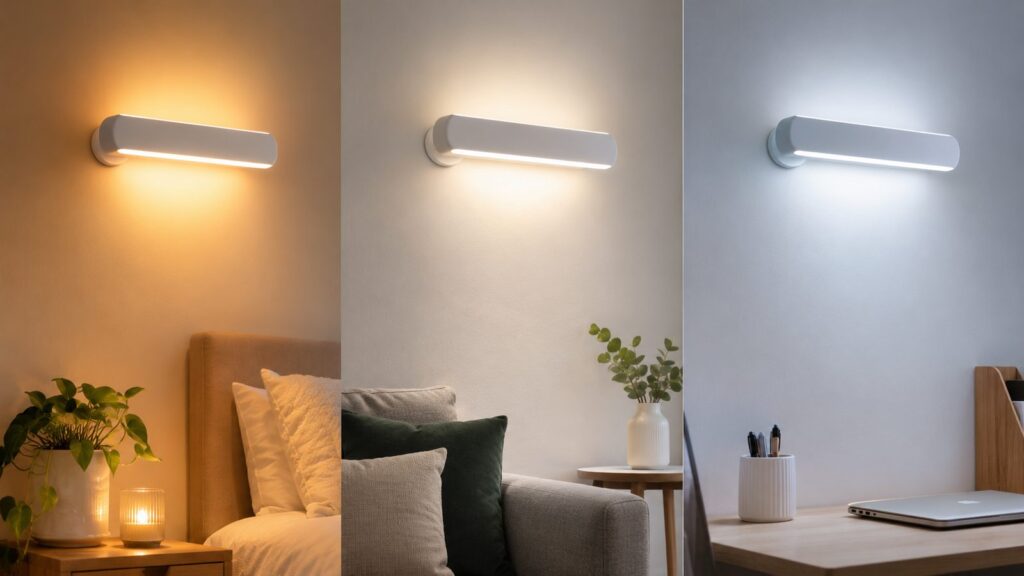
Warm white light usually feels comfortable in bedrooms and living spaces. Neutral white can suit practical areas where clearer visibility matters. Adjustable models let you change the tone for different activities. Matching nearby lighting also improves the result. One noticeably cool fitting beside several warm lamps can look disconnected. Try to keep decorative sources within a similar colour family. Colour temperature cannot compensate for poor placement. A warm lamp can still glare if it points directly toward seated eyes. Position the light before deciding whether its colour feels right.
Seven Useful No-Drill Lighting Ideas
1. Mount adjustable lights beside the bed for evening reading. 2. Add motion-sensor units along a dark hallway. 3. Illuminate framed artwork with a slim rechargeable picture light. 4. Place a small light inside a deep cupboard. 5. Add accent lighting beside shelving in a living room. 6. Use a pair of decorative sconces around a feature wall. 7. Add low-level lighting near stairs where practical.
These ideas work because each fitting has one clear purpose. Buying several identical lights without planning their jobs can create uneven illumination. Decide what needs lighting before choosing the product style. Pairs often look more intentional around beds, artwork, or feature walls. Single fittings work well for practical corners and reading areas. Symmetry matters less when the light performs a specific task.
How to Install Adhesive Lights More Reliably
Start by checking that the intended surface matches the manufacturer’s instructions. Remove dust and grease before attaching the mounting plate. Let cleaned surfaces dry fully before applying adhesive. Mark the position before removing the protective backing. This prevents repeated repositioning, which can weaken some adhesive pads. Use a level when fitting decorative pairs at matching heights. Apply the mounting plate firmly according to its instructions. Some adhesives need time before carrying their full intended load. Do not attach a heavy light immediately unless the manufacturer specifically allows it.
Common Mistakes to Avoid
The first mistake is attaching a heavy fitting to a weak surface. Loose paint or textured wallpaper may not hold an adhesive plate securely. A suitable surface matters as much as the adhesive itself. Another mistake is positioning the light before checking sightlines. Bedside fittings can shine directly into your eyes when mounted too high or angled badly. Test the location while sitting or lying in the normal position. Charging access is also easy to overlook. A unit may look perfect until it needs frequent removal near awkward furniture. Magnetic fittings can make this routine much easier.
Are No-Drill Lights Good for Renters?
They can be a practical option because installation often avoids drilling and electrical alterations. That does not mean every adhesive is harmless to every wall. Paint condition, wallpaper, and adhesive strength still affect removal. Keep the original instructions and removal information. Do not pull strong adhesive straight away from painted surfaces. Use the manufacturer’s recommended removal method to reduce damage risks. Renters should also consider portability before buying. Rechargeable magnetic designs can often move to another room or future home. That makes them more flexible than a permanent electrical fitting.
When a Wired Fitting Is the Better Choice
Cordless lights are useful, but they are not automatically right for every location. Frequently used main lighting may become inconvenient if it needs constant charging. Permanent fittings can make more sense for heavy daily use. Fixed electrical lighting also offers more choice in output and switching arrangements. Installation requirements are different because household wiring is involved. Use a competent electrician when electrical work exceeds your knowledge or confidence. A mixed lighting plan often provides the strongest result. Keep permanent lighting for dependable general illumination. Add cordless fittings where flexibility or easy installation matters most.
Frequently Asked Questions
Do stick on wall lights damage paint?
They can damage weak paint if the adhesive bonds more strongly than the painted surface. Removal technique also affects the result. Check the manufacturer’s instructions and test uncertain surfaces before installation.
Can you put adhesive lights on wallpaper?
Only use them where the product instructions allow it. Textured, delicate, or loosely bonded wallpaper may provide a poor mounting surface. Strong adhesive can also damage the paper during removal.
Are rechargeable wall fittings suitable for reading?
They can work well when they provide enough brightness and directional control. Adjustable heads are useful because they focus light toward the page. Choose a model intended for task lighting rather than decorative glow.
Can magnetic wall fittings be removed for charging?
Many designs use a magnetic connection between the light and its mounting plate. That arrangement makes removal convenient for charging. Check the specific product design before buying because mounting systems vary.
Are cordless lights bright enough for a whole room?
Most are better used as task, accent, or supplementary lighting. One small battery fitting may not provide comfortable general illumination. Combine it with ceiling lights or lamps when the room needs broader coverage.
Choosing the Right Option for Your Home
Start with the job you need the fitting to perform. Then compare brightness, mounting method, charging, controls, and physical size. This approach prevents decorative features from distracting you from everyday usability. For regular bedroom or living-room use, rechargeable magnetic fittings offer a useful balance. Motion sensors make more sense for circulation areas and cupboards. Simple battery models remain suitable when the light will only run occasionally. No-drill lighting works best as part of a wider room plan. Consider furniture, existing lamps, natural light, and the wall finish before buying. A carefully placed fitting can improve comfort without turning installation into a renovation project. —