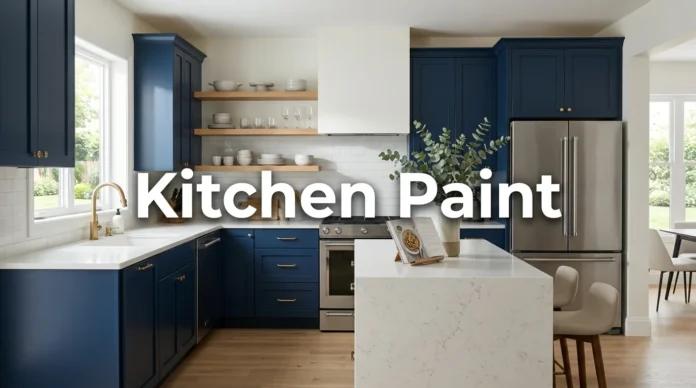
Kitchen paint needs to cope with grease, steam, splashes, and repeated cleaning without looking tired. The right kitchen paint must also suit your walls, cupboards, lighting, and existing finishes. This guide explains what works in UK homes and where specialist coatings are worth the extra cost.
For most UK kitchens, choose a washable, grease-resistant wall emulsion designed for kitchens or hard-wearing interiors. Durable matt suits people who prefer low sheen, while eggshell or satin offers easier wiping. Use specialist cabinet coatings on cupboards, and always prepare greasy surfaces before decorating.
| Surface | Best starting point | Why it works |
|---|---|---|
| Main walls | Washable durable matt or kitchen-specific emulsion | Low sheen with easier cleaning |
| Splash-prone walls | Highly washable kitchen formula | Better suited to grease and repeated wiping |
| Ceilings | Moisture-tolerant matt | Keeps glare low and handles normal kitchen humidity |
| Timber trim | Eggshell or satinwood | Tougher finish for edges and frequent contact |
| Cupboards | Specialist cabinet coating | Designed for harder wear and regular handling |
Key Takeaways
- Prioritise washability, stain resistance, and surface suitability before choosing a colour.
- Durable matt gives a softer look, while eggshell and satin add more sheen.
- Match the coating to walls, ceilings, trim, or cabinetry instead of using one product everywhere.
- Degreasing and sound preparation matter because cooking residue can weaken adhesion.
- Test colours in daylight and evening lighting before committing to the whole room.
How to Choose Kitchen Paint for Each Surface
Start by deciding exactly which surface you are decorating, because each area faces different wear. Walls need easy cleaning, while woodwork needs a harder coating that tolerates knocks. Cupboards need their own system because doors receive frequent handling around edges and handles.
Kitchen walls usually benefit from a washable emulsion with good stain resistance. Modern durable matt formulas can provide a flatter appearance without relying on traditional silk. Eggshell or satin can make cleaning easier, although greater sheen may reveal bumps and poor preparation.
Don’t treat cabinet doors like ordinary plaster walls. Specialist finishes are made for harder service and smoother substrates. DecoHome’s kitchen cupboard coating guide covers timber, MDF, laminate, melamine, primers, and curing in more detail.
Durable Matt, Eggshell, Satin or Silk?
Finish affects appearance, cleaning, and how clearly the wall shows imperfections. A flatter surface tends to disguise small defects better than a shiny one. A higher sheen usually reflects more light and can make poor preparation easier to see.
Durable matt is a strong option for people who want a contemporary, low-sheen wall. Some specialist products are still washable and resistant to common cooking stains. Dulux, for example, sells Easycare Kitchen Matt as a washable, grease-resistant kitchen formula.
Eggshell and satin offer more visible sheen but remain practical choices for busy areas. Silk is also washable, but its stronger shine isn’t popular in every scheme. Your wall condition, preferred look, and cleaning routine should guide your choice.
| Finish | Appearance | Cleaning | Best suited to |
|---|---|---|---|
| Durable matt | Low sheen | Good with a suitable washable formula | Most modern kitchen walls |
| Eggshell | Soft sheen | Easy to wipe | Busy walls and traditional schemes |
| Satin | Noticeable sheen | Easy to clean | High-use areas and selected woodwork |
| Silk | Higher sheen | Generally washable | Rooms where a shinier wall is preferred |
Grease, Steam and Ventilation Matter
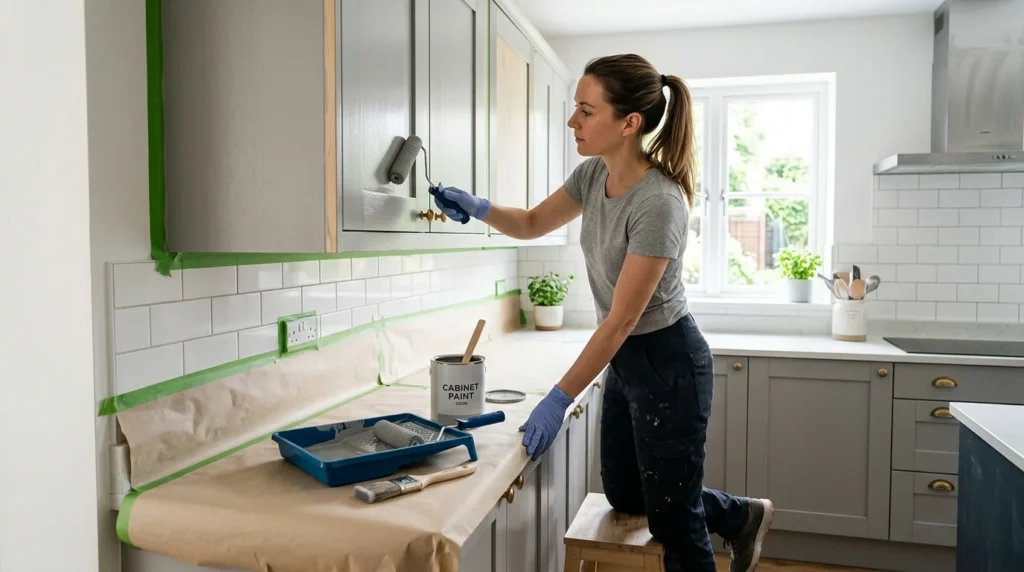
Cooking produces airborne grease, moisture, and regular splashes around working zones. A washable surface makes routine cleaning easier and reduces visible staining. The areas beside hobs, bins, and preparation zones usually need the most attention.
Good ventilation also helps manage moisture created during cooking. It does not replace a suitable coating or proper surface preparation. Fix persistent condensation, leaks, or mould before redecorating the affected area.
Kitchen Colours That Work With UK Light
Colour should respond to the fixed surfaces you plan to keep. Worktops, flooring, splashbacks, units, and large appliances already shape the room’s palette. Starting with those elements usually produces a more connected scheme.
Warm whites, stone, mushroom, taupe, and gentle beige can soften a bright or cool room. Sage, olive, muted blue, and terracotta add colour without demanding a complete redesign. Deeper navy, green, or charcoal can work well in rooms with enough light.
North-facing rooms often make colours appear cooler, while warm artificial lighting can shift them again. Test large samples on more than one wall before buying the full quantity. Check each sample in morning light, dull afternoon conditions, and your usual evening lighting.
Prepare Kitchen Walls Before Decorating
A clean wall gives the new finish a better chance to bond evenly. Grease is often concentrated near cooking areas, handles, switches, and waste bins. Carefully cleaning those zones is more useful than applying an extra decorative coat later.
Use a simple preparation sequence:
- Remove loose material and inspect the wall for cracks, stains, or damp.
- Degrease cooking residue with a suitable cleaner and follow its rinsing instructions.
- Fill holes and damaged areas, then sand repairs smooth after they cure.
- Abrade glossy existing finishes when the new product instructions require a key.
- Prime bare, stained, repaired, or difficult surfaces when the coating system requires it.
- Apply the recommended number of thin, even coats and respect recoat times.
If an old coating is failing badly, see DecoHome’s guide to removing old coatings. A sound base matters more than covering loose material with another layer. Treat possible lead-containing finishes in older homes with appropriate care and specialist guidance.
Large, empty kitchens may tempt you to spray walls for faster coverage. Spraying also creates extra masking, setup, and cleaning work. DecoHome’s paint sprayer guide explains when spraying makes more sense than a roller.
When Can You Use Ordinary Emulsion?
Standard interior emulsion may be acceptable in a low-use kitchen or dining area. Check whether the manufacturer rates that specific product as washable and suitable for the room. A generic label alone does not tell you how well repeated cleaning will go.
Busy cooking zones benefit more from a durable or kitchen-specific wall finish. Choose these products for easier cleaning and stronger resistance to everyday kitchen marks. They are especially useful where children, pets, or frequent cooking increase wall cleaning.
Match Wall Colour to Your Cupboards
Your units usually occupy more visual space than the exposed walls, so treat them as the starting point. Neutral walls can calm strong cabinetry, while coloured walls can add warmth beside pale units. Repeating a worktop or flooring undertone can also connect the whole scheme.
| Cupboard colour | Wall direction | Why it can work |
|---|---|---|
| White or cream | Sage, clay, warm neutral, muted blue | Adds depth without heavy contrast |
| Natural timber | Warm white, olive, soft stone | Keeps the scheme warm and material-led |
| Navy or deep green | Warm off-white, stone, pale neutral | Balances darker cabinetry |
| Grey | Cream, taupe, muted green | Reduces a cold or flat appearance |
| Two-tone units | Quiet neutral | Lets the cabinetry remain the focal point |
Avoid choosing a wall shade from a tiny printed chip alone. Large samples show undertones more clearly beside worktops and doors. They also reveal how the colour changes across different walls during the day.
Walls, Cupboards and Ceilings Need Different Decisions
Cupboards take more knocks than plaster and usually need a specialist system. Smooth laminate or melamine can require abrasion and a compatible bonding primer. Follow the DecoHome cupboard guide linked above when the project includes unit doors or drawer fronts.
Ceilings need less scrubbing than walls but still face humidity and cooking vapour. A suitable matt finish keeps reflection lower and usually suits overhead surfaces well. Deal with stains, leaks, or recurring condensation before adding a fresh decorative layer.
Common Mistakes That Shorten the Finish Life
Most decorating failures come from a mismatch between the surface, preparation, and chosen coating. Rushing the early stages can create peeling, flashing, poor coverage, or visible roller marks. Avoiding a few common errors can save a complete repaint.
- Painting over greasy walls without thorough cleaning.
- Using a cabinet coating on plaster without checking suitability.
- Using ordinary wall emulsion on cupboard doors.
- Skipping primer where stains, bare patches, or glossy surfaces need it.
- Choosing colour before checking the room’s daylight and fixed finishes.
- Applying thick coats to finish faster.
- Cleaning the new surface before it has hardened as directed.
Refresh or Renovate?
Redecorating makes sense when the room layout, units, worktops, and services still function well. Colour and finish can change the atmosphere without creating the disruption of a full refit. It cannot solve failed cabinetry, damaged worktops, or a layout that no longer works.
If the wider room needs major changes, compare the decorating budget with a broader renovation plan. DecoHome’s new kitchen cost guide can help frame that decision. Address functional problems first, then use colour and finishes to complete the room.
Before buying, list every surface and note how often you touch or clean it. Choose a compatible formula for each area, then test the colours at home. That approach usually produces a better result than choosing by shade alone.
Frequently Asked Questions
What is the best kitchen paint for walls?
Choose a washable wall emulsion that is suitable for cooking areas and regular cleaning. Durable matt is a popular low-sheen option, while eggshell or satin adds more sheen. Check the manufacturer’s surface, preparation, recoat, and cleaning guidance before starting.
Is matt emulsion suitable for a kitchen?
Yes, if the formula is designed to be durable and washable. Modern specialist matt coatings can resist everyday marks while keeping a flatter appearance. Ordinary low-durability matt may be less suitable where walls need frequent wiping.
Can bathroom wall coatings be used in a kitchen?
Some products are approved for both rooms, while others target different types of exposure. Kitchens place more emphasis on grease and food staining, while bathrooms face sustained humidity. Check the manufacturer’s stated room and surface suitability before using one product across both spaces.
Do kitchen walls need primer before decorating?
Not every previously coated wall needs a separate primer. Bare plaster, repairs, stains, glossy finishes, or difficult surfaces may need specific preparation. Follow the chosen coating system rather than applying primer automatically.
Can I use wall emulsion on kitchen cupboards?
Ordinary wall emulsion is not the right default for cupboard doors. Units need a harder finish that tolerates handling, cleaning, and edge wear. Use a compatible cabinet system and prepare the door material correctly before applying it.