
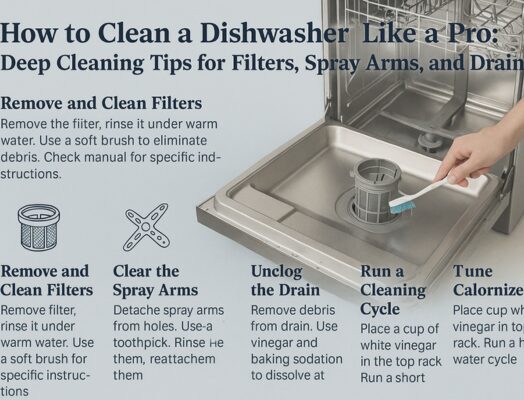
Introduction
Your Dishwasher is a hardworking appliance that makes life easier by reducing the time and effort spent washing dishes. However, regular maintenance is crucial to maintaining efficiency and extending lifespan. Over time, food particles, grease, soap scum, and hard water minerals can build up inside, causing unpleasant odours, poor cleaning performance, and even mechanical issues.
A dishwasher is one of the most convenient kitchen tools, but it needs proper care to work effectively like any appliance. If you’ve ever wondered how to clean a dishwasher correctly, you’re not alone.
This comprehensive guide on how to clean a Dishwasher will walk you through every step of the process, from cleaning filters and unclogging spray arms to clearing out drains. With these expert tips, you can keep your Dishwasher running smoothly and your dishes sparkling clean.
| Component | Cleaning Frequency | Tools/Materials Needed | Cleaning Steps | Pro Tips |
| Dishwasher Filter | Monthly | Dish soap, warm water, toothbrush | Remove filter → Rinse and scrub with soap → Soak in vinegar (optional) → Rinse and reinstall. | Prevent odours and clogs by cleaning regularly. |
| Spray Arms | Monthly | Toothpick, vinegar, bowl | Remove spray arms → Rinse → Clear blocked holes → Soak in vinegar → Rinse and reinstall. | Ensure spray arms spin freely before and after cleaning. |
| Drain Area | Monthly | Baking soda, vinegar, hot water, cloth | Remove debris → Pour baking soda and vinegar → Let sit 15 minutes → Flush with hot water. | Avoid commercial drain cleaners. |
| Interior Walls & Door | Monthly | Dish soap, warm water, microfiber cloth | Wipe walls, ceiling, and door → Focus on detergent dispenser and hinges → Rinse and dry. | Run a vinegar rinse for deeper cleaning. |
| Rubber Seals & Gasket | Monthly | Toothbrush, warm, soapy water, cloth | Wipe gasket and grooves → Scrub corners with brush → Dry thoroughly | Leave door ajar after use to prevent mould |
| Cleaning Cycle | Monthly | White vinegar, baking soda | Place vinegar on top rack → Run hot cycle → Sprinkle baking soda on base → Run short cycle. | Use both vinegar and baking soda for deep deodorizing. |
| Routine Maintenance | Weekly/Daily | Cloth, hot water, rinse aid | Remove food debris → Run hot water before cycle → Use rinse aid → Avoid overloading. | Choose the correct detergent and load items correctly. |
| Signs It Needs Cleaning | As Needed | N/A | Watch for foul odours, dirty dishes, standing water, noise, or visible grime. | Regular checks prevent expensive repairs. |
| What to Avoid | Always | Bleach (on stainless steel), harsh drain cleaners, abrasive scrubbers | Never mix bleach with vinegar or use abrasive materials | Use gentle, non-corrosive cleaners only |
Why Cleaning Your Dishwasher is Important?
Maintaining Efficiency
A clean dishwasher operates more efficiently, ensuring your dishes come out sparkling clean. Regular maintenance prevents clogs and buildup that can impair performance, saving you money on energy bills and prolonging the appliance’s lifespan.
Preventing Odors
Dishwashers can develop unpleasant odours due to food residue and stagnant water. Regular cleaning helps eliminate these odours, ensuring your kitchen stays fresh and inviting.
Health Considerations
A dirty dishwasher can become a breeding ground for bacteria and mould. Deep cleaning regularly reduces the risk of contamination, keeping your dishes safe and hygienic.
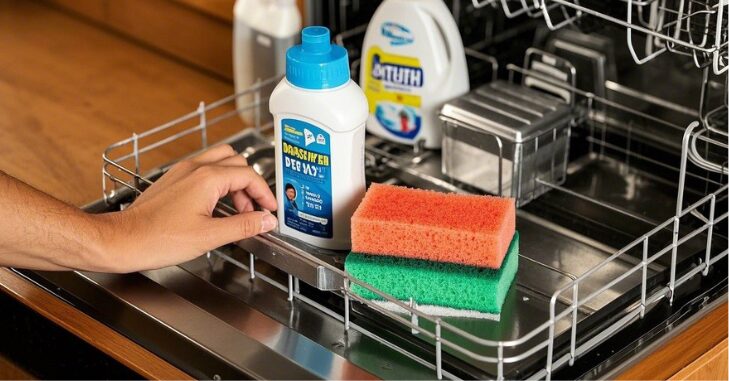
Tools and Supplies You’ll Need
Before you start cleaning, gather the following supplies:
- Dish soap: A gentle dish soap will help remove grease and grime.
- White vinegar: This natural cleaner helps dissolve mineral deposits and eliminate odours.
- Baking soda: A gentle abrasive that can help scrub away stubborn stains.
- Microfiber cloths: Soft and absorbent, perfect for wiping surfaces.
- Old toothbrush: Great for scrubbing hard-to-reach areas.
- Bucket or bowl: To catch any debris when cleaning filters and drains.
- Rubber gloves: To protect your hands while cleaning.
How to Clean a Dishwasher? Step-by-Step Guide
Step 1: Prepare Your Dishwasher
Empty the Dishwasher
Start by removing all dishes, utensils, and racks from the Dishwasher. This will give you full access to interior components and make cleaning more manageable.
Inspect for Debris
Check the bottom of the Dishwasher for any large pieces of food or debris. Use a paper towel or cloth to wipe these away.
Step 2: Clean the Filters
Locating the Filters
Most dishwashers have a removable filter located at the bottom of the appliance. Depending on the model, there may be multiple filters (coarse and fine). Consult your user manual for specific instructions on locating and removing the filters.
Washing the Filters
- Remove the Filters: Carefully remove the filters according to the manufacturer’s instructions.
- Rinse Under Warm Water: Use warm water to rinse off any food particles and grease. If the filter is heavily soiled, soak it in warm, soapy water for 10-15 minutes.
- Scrub with a Brush: Use an old toothbrush to remove stubborn residue. Pay attention to any crevices where grime may accumulate.
- Rinse and Dry: Rinse the filters thoroughly under warm water, ensuring all soap is washed away. Allow them to air dry completely before reinstalling.
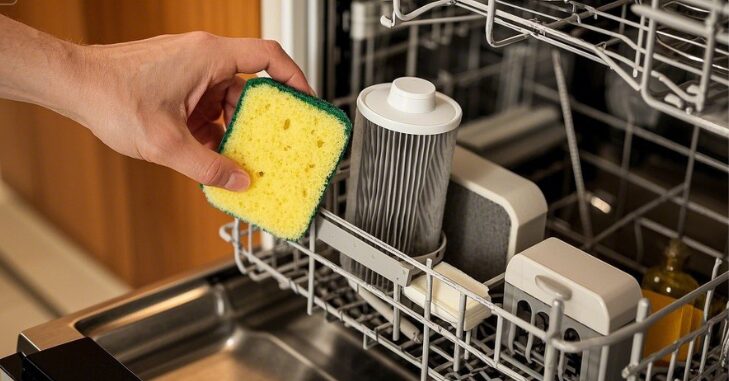
Step 3: Clean the Spray Arms
Inspecting the Spray Arms
The spray arms are crucial for distributing water during the washing cycle. If they are clogged, your dishes won’t get clean. Check for any visible obstructions in the spray arm holes.
Cleaning the Spray Arms
- Remove the Spray Arms: Depending on your dishwasher model, you may need to unscrew or pull them off.
- Rinse Under Running Water: Rinse the spray arms under running water to remove food particles.
- Clear Clogs: Use a toothpick or a small brush to clear any clogged holes.
- Soak in Vinegar: Soak the spray arms in water and white vinegar for about 30 minutes if there are stubborn deposits.
- Reattach the Spray Arms: Reattach the spray arms securely once cleaned and dried.
Step 4: Clean the Interior
Wipe Down the Walls and Door
Using a microfiber cloth dampened with warm, soapy water, wipe down the interior walls and door of the Dishwasher. Pay special attention to the edges and seals where grime tends to accumulate.
Use Vinegar for Odor Removal
To eliminate odours, place a cup of white vinegar on the top rack of the empty Dishwasher and run a hot water cycle. The vinegar will help dissolve mineral deposits and freshen the interior.
Step 5: Clean the Drain
Locate the Drain
The drain is usually located at the bottom of the Dishwasher. Inspect it for food debris or buildup that could cause clogs.
Cleaning the Drain
- Remove Debris: Use a cloth or your hands (wear gloves) to clean out any debris or buildup from the drain.
- Flush with Hot Water: Pour the hot water kettle down the drain to help flush away any remaining particles and clear the pipes.
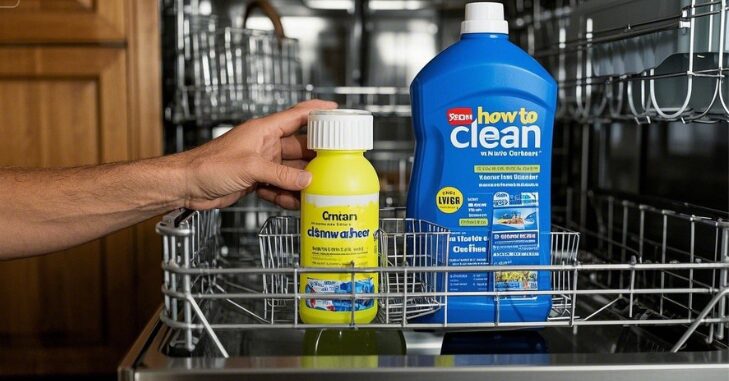
Step 6: Run a Baking Soda Cycle
For an extra cleaning boost, you can run a baking soda cycle.
- Sprinkle Baking Soda: Sprinkle about one cup of baking soda evenly across the bottom of the Dishwasher.
- Run a Short Cycle: Run a short, hot water cycle. This will help remove stains and odours, leaving your Dishwasher smelling fresh.
Step 7: Final Touches
Check the Exterior
Don’t forget to clean the exterior of your Dishwasher. Wipe down the control panel and the door with a damp cloth. Consider using a stainless steel cleaner to enhance the shine of stainless steel finishes.
Reassemble and Test
Once everything is cleaned and dry, reassemble any parts you removed and run a cycle with water to ensure everything works correctly.
Maintenance Tips for a Cleaner Dishwasher
Regular Cleaning Schedule
To keep your Dishwasher in top shape, create a cleaning schedule. Aim for a monthly deep clean, with light cleanings (like wiping down surfaces and checking filters) every week.
Use the Right Detergent
Choosing the right dishwasher detergent can make a significant difference. Opt for high-quality detergents that effectively break down grease and food particles.
Avoid Overloading
Overloading your Dishwasher can lead to poor cleaning results. Ensure that dishes are correctly loaded, allowing water to reach all surfaces.
Rinse Before Loading
While modern dishwashers are designed to handle food residue, rinsing dishes before loading can prevent buildup and improve cleaning efficiency.
Prevent Mineral Buildup with Water Softening Habits
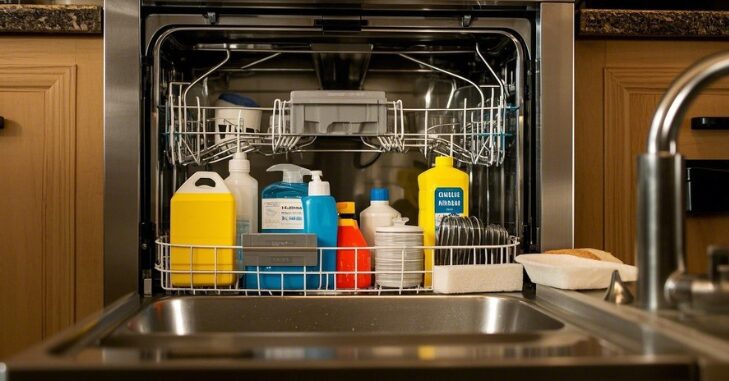
If you live in an area with hard water, mineral deposits can accumulate inside your dishwasher over time, leading to cloudy glasses, reduced efficiency, and stubborn scale on spray arms and filters. To prevent this, consider using a dishwasher-safe water softening agent or adding a rinse aid specifically designed to combat limescale.
Additionally, periodically running an empty cycle with a cup of citric acid or vinegar can dissolve mineral buildup before it becomes problematic. This proactive approach not only preserves the dishwasher’s cleaning power but also prolongs the life of heating elements, gaskets, and metal components, keeping your appliance in peak condition for years.
Importance of Regular Dishwasher Maintenance
Keeping a dishwasher clean is essential for maintaining consistent performance and hygiene in the kitchen. When filters, spray arms, and drains are regularly cleared of food debris and grease, water can circulate freely, ensuring dishes are washed thoroughly and rinsed properly.
This also helps prevent strain on internal components, reducing the chances of breakdowns and extending the appliance’s lifespan. In addition, routine cleaning minimizes the buildup of bacteria and mold caused by trapped moisture and leftover food particles, which can otherwise affect both odor and cleanliness. By maintaining these parts, the dishwasher continues to operate efficiently, using less energy and water while delivering consistently spotless results.
Common Problems and Solutions
Problem: Unpleasant Odours
Solution: If odours persist, ensure the drain is clear, and consider running a vinegar cycle more frequently.
Problem: Dishes Still Dirty After a Cycle
Solution: Check for clogs in the spray arms and ensure the filters are clean. Also, ensure you use the right detergent and load the Dishwasher properly.
Problem: Water Not Draining
Solution: Check the drain for clogs. If the issue persists, consult a professional to inspect the drain pump.
Read More: – Best Dishwasher Tablets for Every Need: Top Picks for Budget-Friendly, Eco-Friendly
Conclusion
Cleaning your Dishwasher may seem like a chore, but with the right approach and tools, it can be a straightforward task with significant benefits. Regular maintenance enhances the efficiency of your appliance and ensures that your dishes come out clean and sparkling.
By following these deep cleaning tips for filters, spray arms, and drains; you can keep your Dishwasher in peak condition, making your kitchen a more efficient and pleasant space.
Apart from that, if you are interested to know about “Best Humidifier UK: Expert Reviews of the Top-Rated Models for Dry Air, Sinus Problems, and Winter Comfort” then visit our “Cleaning” category.
FAQs
Trapped food particles, grease, or mould in the filter, drain, or rubber seals typically cause foul odours. Regular cleaning helps eliminate and prevent odours.
Remove the spray arms and rinse them under warm water. Use a toothpick or small wire to dislodge any debris from the spray holes, then reinstall them.
Yes! Run an empty cycle with a cup of white vinegar on the top rack, sprinkle baking soda on the bottom and run another short cycle. This helps deodorise and break down grime.
Remove the filter (usually located at the bottom of the Dishwasher), rinse it under warm water, and scrub it gently with a soft brush or toothbrush to remove food particles and grease.