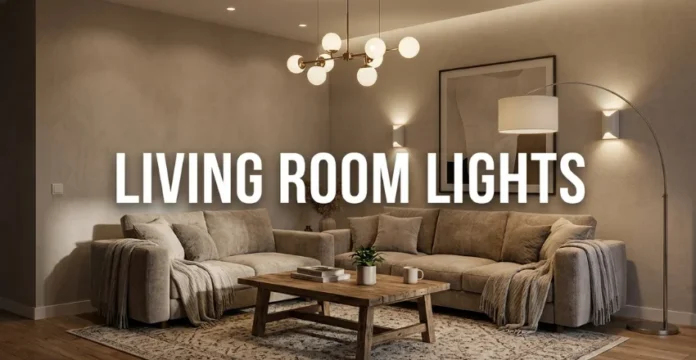
Living room lights work best when they support several activities, not one fixed brightness. A comfortable scheme combines overhead, task, and accent lighting at different heights. That mix lets you read, relax, watch television, or host guests without harsh glare.
| Planning point | Practical starting point | Why it matters |
|---|---|---|
| Main lighting | Ceiling, pendant, flush, or semi-flush fitting | Provides general illumination |
| Task lighting | Floor or table lamp beside seating | Makes reading and detailed tasks easier |
| Accent lighting | Wall lights, shelf lighting, or LED strips | Adds depth and highlights features |
| Colour temperature | Around 2700K for a warm effect | Creates softer evening light |
| Controls | Dimmers, separate switches, or smart bulbs | Changes brightness without adding fittings |
| Bulb type | LED | Uses less electricity than older bulb types |
The most flexible setup combines three lighting layers instead of relying on one overhead fitting. Use general light across the room, focused light beside seating, and softer accents around features. Separate controls or dimmers let each layer suit reading, television, conversation, or quiet evenings.
Key takeaways
- Build the scheme around ambient, task, and accent lighting.
- Choose fixture size according to ceiling height and furniture placement.
- Use warm white bulbs for a relaxed evening atmosphere.
- Position task lamps near seating rather than trying to brighten everything equally.
- Choose dimmers or smart controls if the room serves several purposes.
How to Choose Living Room Lights That Work Together
Start by deciding what you regularly do in the room. Television, reading, entertaining, gaming, and working all need different light levels. Your fittings should support those activities rather than simply match the furniture.
Most UK homes benefit from at least three useful sources placed at different heights. A ceiling fitting can handle general illumination, while a floor lamp supports reading. Wall or table lighting can then soften darker corners.
The simplest buying strategy is to choose function before finish. Decide where light is needed, then compare sizes, bulb fittings, colours, and materials. Shopping for living room lights becomes easier once every fitting has a clear job.
Build three layers instead of relying on the ceiling
Ambient lighting provides enough general light for moving around, tidying, and socialising. It usually comes from a ceiling fitting or several recessed sources. A dimmer makes this layer more useful after dark.
Task lighting should sit close to the activity it supports. Place a floor lamp beside an armchair or a table lamp near a sofa. Directed light reduces the need to brighten the entire room.
Accent lighting adds character rather than basic visibility. Wall fittings, shelf lighting, and hidden strips can draw attention to artwork or architectural details. They also prevent the room from looking flat at night.
Which Type of Light Should You Choose?
Different fittings solve different problems, so no single type suits every room. Your ceiling height, available floor space, seating plan, and electrical points affect the decision. This comparison shows where each option tends to work well.
| Light type | Main advantage | Main drawback | Good choice for |
|---|---|---|---|
| Pendant light | Strong decorative focal point | Can feel low in compact rooms | Higher ceilings and central seating areas |
| Flush or semi-flush light | Saves headroom | Less dramatic visually | Lower ceilings and smaller lounges |
| Floor lamp | Easy to move and position | Uses floor space | Reading corners and rented homes |
| Table lamp | Creates soft, local light | Needs a nearby surface | Side tables, consoles, and shelves |
| Wall light | Saves floor and table space | Fixed versions need installation | Alcoves, fireplaces, and narrow rooms |
| LED strip | Hidden and flexible | Poor as the only light source | Shelves, cabinets, media walls |
| Smart bulb | Easy brightness and colour control | Compatibility varies | Multi-purpose rooms and flexible routines |
For most households, start with a dimmable ceiling fitting and one dedicated task lamp. Add one or two accent sources where the room feels visually dark. This approach gives more flexibility than buying several decorative fittings without a plan.
How Bright Should a Lounge Be?
Brightness depends on the room size, wall colours, daylight, and intended activities. A useful planning range for general illumination is roughly 100 to 200 lux. Reading areas usually benefit from stronger local lighting than the rest of the room.
Lumens measure how much light a bulb or fitting produces. A 20-square-metre room at 150 lux needs roughly 3,000 lumens across all sources. That total works better when several fittings share the load.
Avoid choosing bulbs by wattage alone because wattage measures energy use. Check the lumen figure when comparing modern LEDs instead. You can then choose brightness without relying on outdated incandescent comparisons.
Choose a Colour Temperature That Feels Comfortable
Colour temperature changes how warm or cool the room appears after sunset. Warm white light around 2700K is a common choice for relaxing areas. IKEA also identifies 2700K as warm white and suitable for softer general light.
Cooler bulbs can make working or detailed tasks feel clearer. Mixing noticeably warm and cool bulbs in one small space can look inconsistent. Keep nearby decorative fittings within a similar colour range.
Colour rendering also matters when the room contains artwork, timber, or colourful textiles. A higher CRI helps colours appear closer to their natural appearance. This matters when you have carefully coordinated fabrics using DecoHome’s home fabric guide.
Match Ceiling Fittings to the Room Height
Large pendants and chandeliers need enough space to feel intentional. In a low room, a flush or shallow semi-flush design protects headroom. It can also reduce visual clutter above central seating.
Higher ceilings give you more freedom with drops and sculptural fittings. A pendant can become a focal point without crowding the furniture below. Keep its proportions connected to the room and major furniture pieces.
If ceiling height is limited, shift some visual interest towards lower levels. A strong floor lamp or a pair of wall fittings can provide character. The room gains depth without a bulky overhead fitting.
Position Light Carefully Around a Television
Television areas need softer lighting than reading zones. Bright sources reflected in the screen can become distracting during films or evening viewing. Avoid placing an exposed bulb directly opposite the display.
Low-level light beside or behind the television can reduce the contrast between screen and wall. Built-in shelf lighting can work particularly well around a feature unit. DecoHome’s media wall with fireplace guide includes examples using integrated LED accents.
Keep decorative light subtle rather than surrounding the screen with excessive brightness. The television should remain the strongest visual source during viewing. Use separate controls so accent lighting can run independently of brighter task lamps.
Make a Small Room Feel Better Lit
A compact room rarely needs many large fittings. Light from several heights can make it feel more balanced without consuming much space. Wall-mounted fittings are particularly useful where floor area is limited.
Use pale shades or diffusers when you want softer light across a wider area. Use directed lamps when one chair or desk needs extra brightness. Combining both stops a small room from feeling either gloomy or overlit.
Architectural lighting can also keep surfaces clear. DecoHome’s baseboard trim ideas include integrated lighting as a modern detail. Similar concealed lighting can work beneath shelves or built-in furniture.
Use LEDs, Dimmers, and Smart Controls Wisely
LED bulbs are now the standard energy-efficient choice for most domestic fittings. The Energy Saving Trust describes LEDs as the most energy-efficient common household bulb type. They also reach full brightness immediately after switching on.
Dimmers can change one fitting from practical daytime light to softer evening illumination. Check that both the bulb and dimmer are designed to work together. Some smart bulbs require their own compatible controls instead of conventional dimmer switches.
Smart controls make sense when one room has several daily uses. Scenes can combine different brightness levels without manually adjusting every lamp. DecoHome also covers connected lighting within its guide to transformative smart home upgrades.
Match the Lighting Style to Your Interior
Lighting should relate to the room without copying every other finish. Brass can add warmth, while black metal gives stronger contrast. Glass and fabric shades often spread light more softly than exposed bulbs.
Traditional rooms can suit pleated shades, decorative wall fittings, or classic chandeliers. Contemporary rooms often favour simple shapes and fewer visible details. Natural materials can work across both styles when their proportions remain simple.
If you prefer warmer timber and nature-inspired finishes, coordinate the lamps with existing textures first. DecoHome’s guide to classic charm and natural materials offers useful palette ideas. Repeating one material or finish can connect separate fixtures without making them identical.
Avoid the Most Common Lighting Mistakes
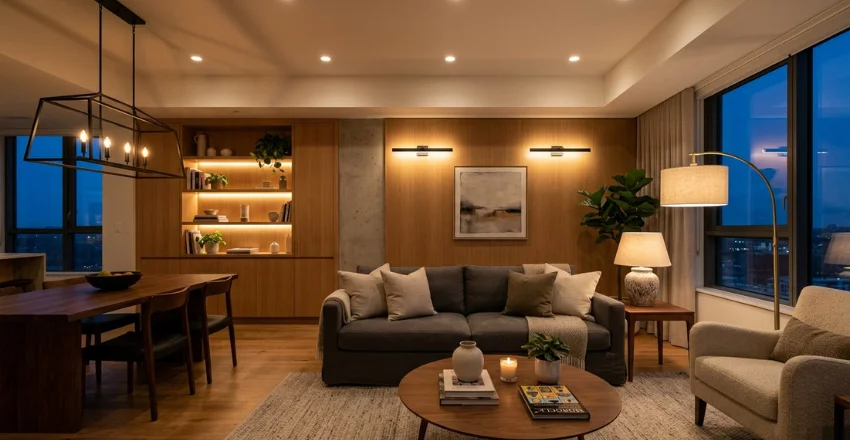
The first mistake is expecting one bright ceiling fitting to handle every activity. It creates little flexibility and often produces uncomfortable contrast after dark. Adding one well-positioned task lamp can make a noticeable difference.
Another mistake is selecting decorative fittings before checking their light output. A beautiful shade may block more light than expected. Always consider lumens, bulb direction, and shade opacity alongside appearance.
Poor positioning can also create glare on televisions or directly into seated eyes. Think about sightlines from sofas and armchairs before fixing wall lights. Movable lamps are useful when you are still testing the layout.
Fixed Lighting and Electrical Safety in the UK
Portable lamps are simple because they usually plug into an existing socket. Fixed wall and ceiling fittings involve the household electrical installation. Electrical work must comply with relevant safety requirements and manufacturer instructions.
Building Regulations Part P covers electrical safety in dwellings in England. New circuits and certain other work have specific compliance requirements. Check the current Part P guidance on GOV.UK before planning significant wiring changes.
Replacing a decorative lamp is different from altering fixed wiring. Use a competent electrician whenever the work exceeds your knowledge or confidence. This is especially sensible when adding new circuits, switches, or several permanent fittings.
Frequently Asked Questions
How many living room lights do I need?
There is no fixed number because room size and activities vary. Most spaces work better with several sources instead of one powerful fitting. Start with general, task, and accent light, then add sources only where needed.
Are ceiling lights or floor lamps better?
They solve different problems rather than competing for the same job. Ceiling fittings provide broad general illumination, while floor lamps give focused or softer local light. Using both usually gives more control throughout the evening.
Is warm white or cool white better for a lounge?
Warm white around 2700K usually suits relaxed evening use. Cooler light can be useful for focused tasks or work areas. Choose one main colour family so nearby fittings do not clash visually.
Can LED strips replace normal lamps?
LED strips work best as accent or indirect lighting. They can highlight shelves, television units, coving, or architectural features. Most rooms still need a stronger ambient or task source for practical activities.
A Simple Lighting Plan for Most UK Homes
Start with one controllable source for general illumination, then add a good task lamp beside your main seating area. Add softer accent light only where it improves depth or highlights a feature. This gives the room useful lighting without filling every surface with lamps.
Choose warm LEDs if comfort is your priority, then check lumens before buying. Keep fixture scale appropriate for the ceiling and furniture. Separate controls will make the finished scheme far more flexible.
Before ordering anything, sketch the furniture and mark where each activity happens. Then assign one lighting job to each fitting you plan to buy. That simple process produces a calmer, more practical result and reduces unnecessary purchases.