A great TV wall should mimage.our living room easier to use, not turn the television into the only thing you notice. These media wall ideas combine storage, lighting, texture, and practical cable management, with options for large rooms, compact spaces, and homes where a fireplace is part of the plan.
Short answer: A good media wall starts with your room layout, not the TV. Keep the screen at a comfortable seated eye level, hide cables without blocking future access, and choose storage and finishes that suit the space. In smaller rooms, a slim built-in or floating unit can work better than a deep stud wall.
| Design choice | Works well for | Main planning point |
| Slim floating TV wall | Small living rooms | Keep floor space visible. |
| Full-width cabinetry | Homes needing storage | Mix closed cupboards with display space. |
| Timber or MDF panelling | Adding warmth and texture | Coordinate the finish with the room. |
| Electric fireplace feature | Cosy focal points | Follow fire and TV installation guidance |
| Freestanding modular unit | Renters or lower budgets | Choose a design that can move or change. |
12 Media Wall Ideas for a More Considered Living Room
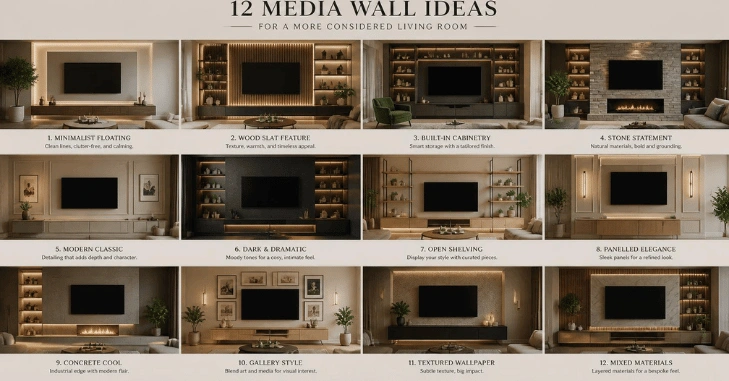
Media wall ideas Current interior trends are moving towards features that feel connected to the architecture rather than generic accent walls. Panelling around shelving, fireplaces, and TV areas fits that more personalised direction for 2026.
1. Keep a Small Room Slim and Simple
Avoid building farther into the room than necessary. A wall-mounted TV, shallow base cabinets, and a textured backdrop can define a space without sacrificing much floor space. Designers also recommend deciding on the furniture layout first and placing the screen according to how the room is used.
2. Build Storage Across the Full Width
Wall-to-wall cabinetry can turn an awkward blank wall into useful storage. Keep everyday clutter behind doors, then reserve a few open shelves for books, ceramics, or photographs. For more ways to make storage part of the architecture, see DecoHome’s guide to smart additions for comfort and space.
3. Use Timber Slats for Warmth
Vertical timber slats soften the appearance of a black screen and introduce natural texture. They work especially well with cream, taupe, olive, charcoal, and warm-white color schemes. Use the material selectively rather than covering every surface. This approach keeps the feature connected to the rest of the room.
4. Try Painted MDF for a Tailored Look
Painted MDF suits homes where rustic timber would feel out of place. Shaker-style doors, simple moldings, or wide tongue-and-groove panels can create a more traditional finish. For a polished result, repeat colors or finishes already used in your furniture. DecoHome has more guidance on creating a more luxurious interior.
5. Add a Stone or Marble Effect Behind the Screen
Large-format stone, porcelain, or convincing stone-effect panels can make the central section feel more substantial. Keep the surrounding cabinetry simple so the patterned surface remains the main decorative detail. In a compact room, one central slab may feel calmer than several competing materials.
6. Combine the TV with an Electric Fireplace
An inset electric fire adds warmth and gives the lower half of a tall feature wall a purpose. Proportion matters, particularly when the television sits directly above the fire. If this is your preferred layout, DecoHome’s dedicated guide to a media wall with fireplace covers fireplace types, design choices, and installation considerations.
7. Put the Fireplace Beside the TV
The fire doesn’t have to sit underneath the screen. An offset layout can keep the television lower while creating two balanced focal points. This arrangement also suits wider rooms where a tall central stack would feel too formal.
8. Hide the Screen When You Aren’t Watching

Sliding panels, pocket doors, or framed cabinetry can conceal the television between programs. Another option is a slim art-display TV surrounded by framed prints or shelves. Built-in doors can also keep consoles and boxes out of view, provided that ventilation and service access remain available.
9. Mix Open Shelves With Closed Cupboards
Open shelving gives you somewhere to display objects, while closed units provide storage for routers, controllers, games, and spare cables. A useful rule is to hide the practical items first. Add decorative objects only after you have solved the storage problem.
10. Paint Everything One Deep Color
Painting the cabinets, shelves, and background in a single dark shade can reduce the contrast around a switched-off TV. Navy, forest green, brown, and charcoal can all work well. Carry a related color into cushions, curtains, or artwork so the feature feels connected to the wider room.
11. Use Lighting as an Accent, Not a Light Show
Warm, dimmable lighting beneath shelves or inside niches can add depth after dark. Bright strips around every edge often compete with the screen. Current design advice favors subtle lighting that highlights materials and objects without distracting from viewing.
12. Create the Look Without Permanent Joinery
You don’t need a new stud wall. A wall-mounted television, low cabinet, floating shelves, and decorative panels can create the same visual structure. This is a useful option for renters, people with tighter budgets, or anyone who expects the room layout to change. For other manageable projects, browse DecoHome’s easy home upgrades.
Make the Design Fit Your Room
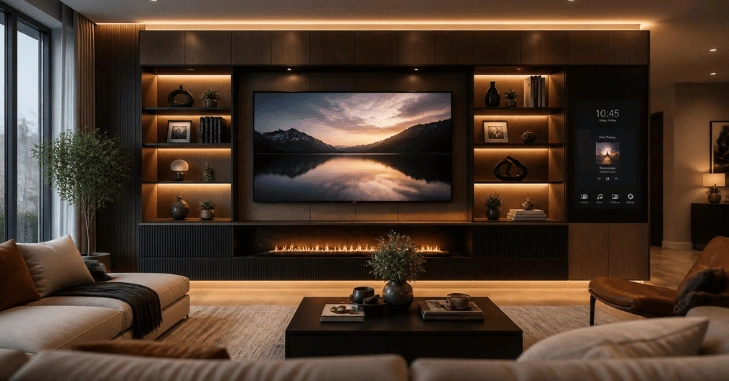
Start by photographing the wall straight on and marking the TV, cabinet, and shelf dimensions with masking tape. Sit in your normal viewing position before deciding on anything permanent.
Then choose one material, one storage strategy, and one lighting approach that already make sense for the room. A well-planned TV feature should solve clutter and viewing problems first. The decorative finish is what makes that practical solution feel like part of your home.
Plan the Practical Details Before Choosing Finishes
Start with your sofa position and test the proposed television height while sitting down. Current guidance recommends keeping the screen around a comfortable seated eye line rather than mounting it unnecessarily high.
Then plan what needs to sit behind the finished surface:
- Power sockets for the TV, fire, console, router, and lighting.
- HDMI, aerial, and data connections.
- Ventilation around consoles and other heat-producing equipment.
- An accessible route for replacing cables or repairing equipment.
- Space for a soundbar, speakers, and future devices.
Rear access deserves particular attention. Homebuilding & Renovating advises against creating a finished installation that requires the removal of plasterboard or joinery whenever equipment needs replacing.
How Much Does a Media Wall Cost in the UK?
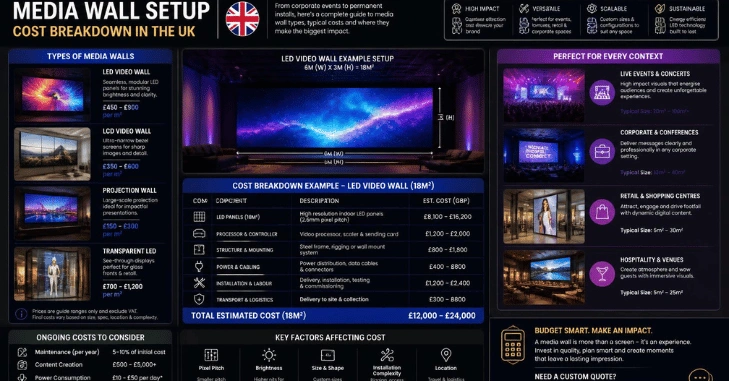
The price depends on the structure, finish, electrical work, cabinetry, and whether an electric fire is included. A simple decorative TV wall can cost much less than bespoke floor-to-ceiling joinery.
A UK pricing guide updated for 2026 puts costs at about £800 to £1,500 for a basic DIY fireplace build. A professionally installed mid-range project runs from roughly £1,800 to £3,500, while premium bespoke work ranges from £3,500 to £7,500 and above. Treat these figures as planning ranges and get quotes for your exact room.
If your budget is smaller, spend first on safe electrical work, sensible TV placement, and cable access. Decorative panelling, paint, and styling can be upgraded later.
Conclusion
The best media wall ideas are not simply about creating an attractive backdrop for your television. A successful design should balance style with everyday practicality, giving you comfortable viewing, useful storage, organised cables, suitable lighting, and a finish that complements the rest of your living room.
Whether you choose a slim floating unit for a small space, full-width cabinetry for extra storage, timber slats for warmth, painted MDF for a tailored appearance, or an electric fireplace for a cosy focal point, the design should be based on how your room is actually used. Careful planning is particularly important when combining a TV with a fireplace, electrical equipment, lighting, or built-in joinery.
Frequently Asked Questions
Choose shallow cabinetry, wall-mounted components, and one restrained finish. Keeping more of the floor visible can make the installation feel lighter. Built-ins can also combine the television with storage, eliminating the need for separate furniture.
Yes, but the trend is becoming more individual. Current 2026 interiors coverage points to panelling and built-ins that respond to architectural features rather than relying on formulaic accent walls.
It can, but viewing comfort and the fireplace manufacturer’s installation requirements must come first. Check the finished viewing height before construction and follow the stated heat-clearance requirements for the chosen fire and television.
Decorative panels, shelving, and simple cabinetry may be suitable projects for an experienced DIYer. A stud-wall project becomes more involved when it includes new electrical circuits, a heavy television, or an inset fire.