
An oil boiler can provide reliable heating for homes without access to the mains gas network. Modern condensing models offer better efficiency, but you need to consider installation costs and fuel storage. This guide covers costs, types, maintenance, efficiency, regulations, and alternatives for UK homeowners.
An oil-fired heating system burns kerosene stored in a tank at your property. It suits rural and off-grid homes where mains gas isn’t available. Replacement costs commonly reach several thousand pounds, so compare boiler types, installation requirements, fuel costs, and alternative heating systems before committing.
| Key point | Typical UK consideration |
|---|---|
| Main fuel | Kerosene heating oil |
| Common locations | Rural and off-gas-grid homes |
| Boiler types | Regular, system and combi |
| Typical replacement cost | Roughly £2,200–£5,500 fitted |
| Installation time | Commonly one to four days |
| Fuel storage | Separate oil tank required |
| Installer | Use a suitably registered competent professional |
| Main alternative | Heat pump or another electric heating system |
What Is an Oil Boiler and How Does It Work?
An oil-fired boiler heats water by burning kerosene stored in a tank outside your home. Heated water then circulates through radiators, underfloor heating, or a hot-water cylinder. The principle resembles other wet central-heating systems, although the fuel supply works differently.
A burner draws oil from the tank and mixes it with air before combustion. Heat then transfers through the boiler into the heating system’s water. Modern condensing units also recover heat that older designs would lose through the flue.
This setup gives households independence from the mains gas network. However, owners must monitor fuel levels and arrange deliveries before the tank becomes empty. Heating oil prices can also change because households purchase fuel on the open market.
Oil Boiler Types Available in the UK
There are three main domestic configurations: regular, system, and combination models. Each supports different household layouts and hot-water demands. Choosing correctly matters more than selecting the largest available output.
Regular boilers
A regular boiler typically uses a separate hot-water cylinder and additional system components. It can suit older properties where existing pipework already supports that arrangement. Larger households may also value stored hot water during periods of heavy demand.
Replacing an existing regular unit with a similar model can reduce installation changes. The engineer must still assess pipework, controls, flue arrangements, and the fuel supply. An older cylinder may also deserve inspection before new equipment is installed.
System boilers
System boilers also heat a separate hot-water cylinder, but the unit includes several components. This arrangement can simplify installation compared with some traditional systems. It also supports households that use hot water from several outlets simultaneously.
Stored hot water requires space for a cylinder somewhere in the property. That can make the configuration less attractive in smaller houses. Homeowners should balance available space against their peak hot-water requirements.
Oil combi boilers
An oil combi provides heating and hot water without a separate cylinder. This arrangement can save indoor space and remove the need to store hot water. It can work well where household demand suits the boiler’s delivery capacity.
Combi models can cost more than comparable regular replacements. Current UK price guides often place fitted oil combis toward the upper end of replacement budgets. Deco Home’s combi boiler guide provides more background on combination heating systems.
How Much Does an Oil Boiler Cost in 2026?
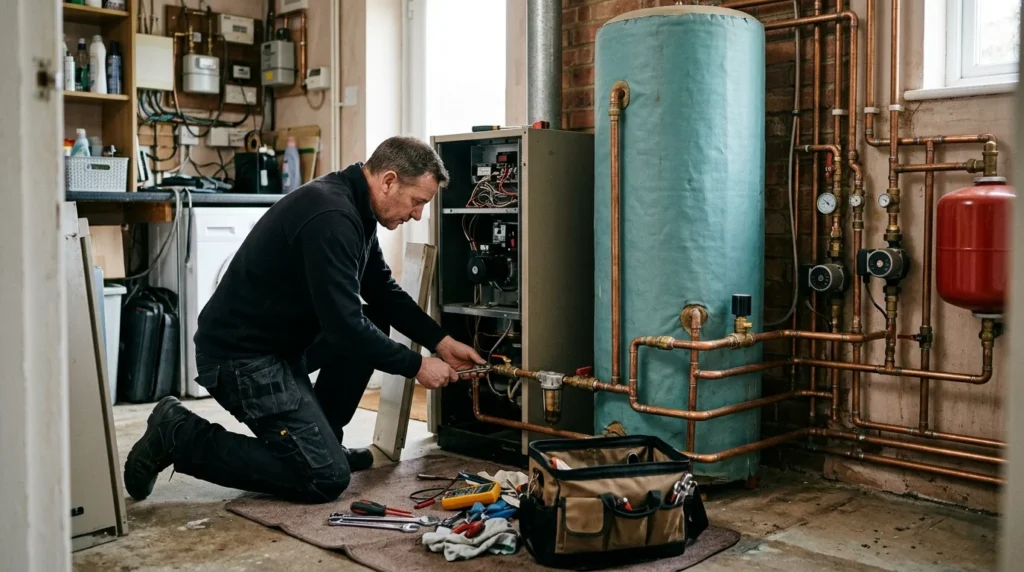
UK replacement prices vary widely because every property and heating system is different. Current consumer and trade guides commonly place fitted replacements around £2,200 to £5,500. Combi installations, relocations, tank work, or complex flues can push quotes toward the higher end.
| Installation | Indicative 2026 range |
|---|---|
| Regular or system replacement | £2,200–£4,500 |
| Oil combi replacement | £4,000–£5,500 |
| New system with tank | Often £4,500+ |
| Annual servicing | Usually an additional ongoing cost |
These figures should be treated as budgeting ranges rather than fixed quotations. Boiler output, location, labour rates, flue changes, controls, and pipework can alter the final price. Tank condition can also add significant replacement costs.
A straightforward replacement in the same position usually costs less than relocating the appliance. Moving it can require additional pipework, electrical work, drainage, and flue alterations. Request an itemised quote so those costs remain visible.
What Affects Installation Cost?
The appliance itself represents only part of the total bill. Installation complexity, property layout, heating demand, and existing equipment all affect labour and materials. A site survey therefore provides better guidance than an online headline price.
Important cost factors are listed below.
- Boiler type and required heat output
- Internal or external installation
- Existing pipework condition
- Flue position and required alterations
- Heating controls and thermostat upgrades
- Oil tank condition and location
- System cleaning or flushing
- Regional labour costs
- Moving the appliance to another location
Replacing ageing heating equipment can involve more than just swapping one appliance. Deco Home’s guide to signs that heating equipment needs replacing can help you spot broader warning signs. It is useful when repairs are becoming frequent or performance has declined.
How Efficient Are Modern Oil Boilers?
Modern condensing boilers recover more usable heat from combustion than older non-condensing units. Actual efficiency still depends on system design, controls, servicing, and how the household operates its heating. A high-rated appliance cannot compensate fully for major heat loss elsewhere.
Insulation can therefore matter as much as equipment selection. Reducing heat escaping through the roof and building fabric lowers the heating demand. Deco Home’s loft insulation cost guide explains common insulation choices and budgeting considerations.
Radiator performance also affects comfort and system efficiency. Furniture or poorly designed covers can restrict airflow and interfere with thermostatic controls. See Deco Home’s radiator cover guide for UK homes before enclosing heat emitters.
What Does Oil Heating Cost to Run?
Running costs depend on consumption, fuel price, property size, insulation, weather, and boiler efficiency. Heating oil is purchased by volume, so household costs change as kerosene prices move. Your delivery timing can therefore influence annual spending.
Which? reported an average kerosene price around 71p per litre in March 2026. Its example medium-energy-use home required roughly 11,500kWh annually for heating and hot water. Real rural properties can consume more because many are larger or harder to insulate.
Buying ahead can reduce the risk of emergency deliveries during cold weather. Checking several local suppliers may also reveal meaningful price differences. Never let price encourage unsafe storage or the use of unsuitable containers.
Oil Storage and Installation Rules
Domestic heating oil requires a correctly installed storage tank. In England, new or replacement domestic oil containers must meet relevant Building Regulations. Wales, Scotland, and Northern Ireland have different regulatory arrangements.
Boiler installation also falls under Building Regulations because combustion appliances create safety and efficiency requirements. Registered competent installers can normally self-certify compliant work under the appropriate scheme. Otherwise, building control may need to be involved.
Tank siting needs careful consideration because of fire and pollution risks. An installer should inspect the existing store when replacing heating equipment. Damaged, leaking, unsupported, or unsuitable tanks may require corrective work.
Does an Oil Boiler Need Regular Servicing?
Annual professional servicing is a sensible maintenance schedule for most domestic systems. The engineer can inspect combustion, safety components, filters, seals, flue arrangements, and visible fuel connections. Manufacturer servicing requirements should also be followed to protect warranty coverage.
Soot or combustion problems can reduce performance and indicate a developing fault. Strange noises, repeated lockouts, visible leaks, or unreliable heating warrant earlier attention. Do not attempt combustion repairs without suitable professional competence.
Homeowners should also periodically inspect the visible oil tank. Look for cracks, corrosion, staining, movement, or signs of leakage. Report suspected leaks promptly because escaping heating oil can cause expensive environmental damage.
Oil Heating Versus a Heat Pump
A heat pump uses electricity to move heat rather than producing it through combustion. That creates a different installation, operating, and maintenance profile. Suitability depends on heat loss, emitter sizes, property layout, electrical supply, and available outdoor space.
An oil system may remain practical where suitable equipment already exists and replacement work is straightforward. A heat pump can appeal to households planning broader efficiency improvements. Don’t choose either option based on fuel price alone.
A proper heat-loss calculation offers better guidance than simply copying an old boiler’s capacity. Homeowners considering electrification can read Deco Home’s heat pump servicing and efficiency guide. Compare installation changes, expected temperatures, controls, maintenance, and long-term plans.
How to Choose the Right System
Start by reviewing your household’s heating and hot-water demand. Count bathrooms, consider simultaneous hot-water use, and assess available cylinder space. Your installer should then calculate the property’s required output.
Next, inspect the wider heating system rather than treating the appliance separately. Radiators, controls, insulation, pipework, and the storage tank affect performance. Correcting weaknesses during replacement can prevent unnecessary future work.
Finally, obtain detailed quotations from suitably qualified installers. Compare what each quotation includes instead of choosing purely on total price. Check commissioning, controls, flue work, disposal, certification, warranty registration, and tank assessment.
Is an Oil Boiler Still Worth Choosing?
It can remain a practical choice for an off-grid property already equipped for oil heating. A like-for-like replacement may require fewer building changes than switching technologies immediately. Reliable fuel delivery and suitable storage remain essential.
The decision becomes less straightforward when major upgrades are already required. Replacing the tank, radiators, controls, or extensive pipework can change the financial comparison. At that point, it becomes worth comparing heat pumps with other alternatives.
Look beyond the purchase price before deciding. Compare likely fuel use, maintenance, expected ownership period, home efficiency, and future renovation plans. A professional heat-loss assessment can make those comparisons more meaningful.
Frequently Asked Questions
How much does an oil boiler cost in the UK?
A typical fitted replacement can cost roughly £2,200 to £5,500 in 2026. Straightforward regular models are often cheaper than complex combi installations. Relocation, tank replacement, or flue work can increase the final quote.
How long does installation take?
A straightforward replacement can sometimes be completed within a few days. Current UK guides commonly quote 1 to 4 days for many installations. More complicated conversions, relocations, or tank work can extend the schedule.
Can I install one myself?
Combustion equipment and oil storage involve safety, environmental, and Building Regulations requirements. Using a suitably registered competent installer simplifies compliance and certification. DIY installation is therefore not suitable for most homeowners.
Do I need planning permission?
Internal boiler replacement usually doesn’t require planning permission in England. External flues usually fall under permitted development when specified conditions are met. Listed buildings and designated areas can require additional checks.
Should I replace my oil tank at the same time?
Not every boiler replacement automatically requires a new tank. The installer should assess its condition, support, safety, and compliance before commissioning the new system. A leaking or immediate environmental risk requires appropriate corrective action.
Plan the Whole Heating System, Not Only the Boiler
Replacing heating equipment is a good opportunity to review the whole property. Check insulation, controls, radiators, fuel storage, hot-water demand, and future renovation plans. This approach can prevent you from spending heavily on equipment while leaving obvious efficiency problems untouched.
Get several detailed quotations before approving the work. Ask each installer to explain system sizing, certification, tank condition, controls, and anticipated installation changes. A clear specification makes competing quotes easier to compare and reduces costly surprises.