To get rid of mould, first stop the moisture that feeds it, then clean small patches on hard surfaces with a mould remover or a mild detergent solution, dry the area thoroughly, and keep humidity down so it does not return. The NHS advises that you should only tackle mould yourself if it is caused by condensation and covers an area smaller than about one square metre. Larger outbreaks, mould caused by leaks or rising damp, and mould in a rented home should be dealt with by a professional or your landlord. This guide covers each surface in a typical UK home, what works and what does not, and how to prevent mould coming back.
Why mould grows in UK homes
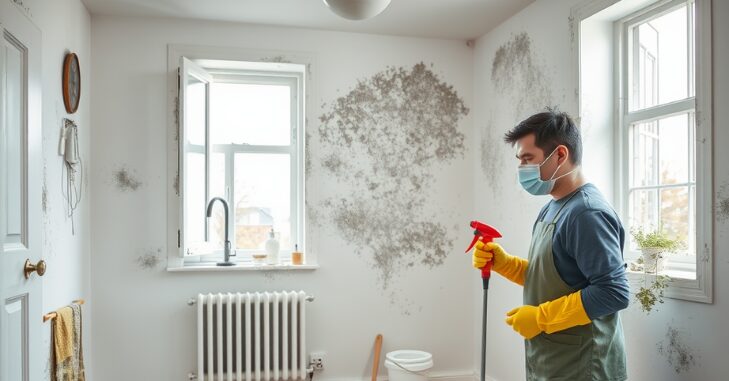
Mould is a fungus that grows wherever moisture, a surface to feed on and still air meet. In British homes the most common cause is condensation: warm, moist air from cooking, showers, drying laundry and breathing hits a cold wall or window and turns back into water. That is why mould tends to appear in winter, in corners of outside walls, around window frames, behind wardrobes and on bathroom ceilings. The other main causes are:
- Penetrating damp: water getting in from outside through faulty gutters, cracked render, roof leaks or failed pointing.
- Rising damp: ground moisture moving up walls, usually in older properties with a failed or bridged damp-proof course.
- Plumbing leaks: slow drips from pipes, radiators, showers and appliances.
Cleaning alone will not fix mould from penetrating or rising damp, or from a leak. It will come back until the water source is repaired.
Health risks and when not to do it yourself
Mould releases spores that can trigger allergic reactions, asthma attacks, coughing, sneezing, a runny nose, red eyes and skin rashes. According to the NHS, babies and children, older people, people with existing skin problems or respiratory conditions such as asthma, and people with weakened immune systems are more at risk. If anyone in the household falls into these groups, or has symptoms that seem linked to damp, speak to a GP and avoid doing the cleaning yourself.
Call in a professional or your landlord if:
- the mould covers more than about one square metre, or keeps returning quickly after cleaning
- it is caused by sewage, flooding or a leak rather than condensation
- there is a musty smell but you cannot see the source, which can mean mould inside walls, under floors or in a loft
- plaster is soft, crumbling or stained with tide marks, which suggests a damp problem in the structure

What you need before you start
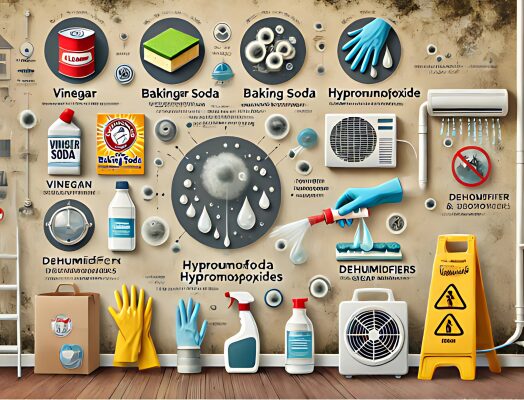
- Rubber gloves, goggles without ventilation holes and a well-fitting mask (an FFP2 or FFP3 mask filters spores far better than a basic dust mask)
- A bucket, soft cloths and a soft brush
- A plastic bag for used cloths
- Mild detergent, such as washing-up liquid, or a mould and mildew remover labelled for the surface you are cleaning
- Old clothes you can wash on a hot cycle afterwards
Open windows but keep internal doors shut so spores do not drift into other rooms. Remove soft furnishings and clothes from the area first. Never mix cleaning products, particularly bleach with vinegar, ammonia or other cleaners, because the combinations can release toxic gases.
Which cleaner to use
| Cleaner | Best for | Limitations |
|---|---|---|
| Washing-up liquid in warm water | Light mould on painted walls, sealed wood, plastic | Removes growth but does not kill roots in porous material |
| Mould and mildew spray (fungicidal) | Walls, ceilings, silicone, tile grout | Follow label and ventilate well; many contain bleach |
| Diluted chlorine bleach | Non-porous surfaces such as tiles, glass, sealed uPVC | Bleaches colour, gives off fumes, poor on porous materials like plaster and wood |
| White vinegar (undiluted) | Hard surfaces, window seals, light regrowth | Weaker than fungicidal products; can damage natural stone |
| Bicarbonate of soda paste | Mild abrasion on grout and hard surfaces | Mainly a cleaner rather than a fungicide |
How to get rid of mould on walls
- Find and fix the moisture source, or at least reduce condensation, before cleaning.
- Gently wipe the mould with a cloth dampened in soapy water or a fungicidal mould remover. Do not brush dry mould, as that throws spores into the air.
- Leave any product on for the time shown on the label, then wipe again with a clean damp cloth.
- Dry the wall with a clean cloth and put the used cloths in a sealed bag straight away.
- Once the wall is fully dry, you can repaint with a fungicidal or anti-mould paint. Do not paint over active mould, as it will grow through.
If mould keeps appearing on the same outside wall, the wall may be too cold. Improving insulation is a longer-term fix; our guide to external wall insulation explains what it involves for UK homes.
How to get rid of mould on ceilings
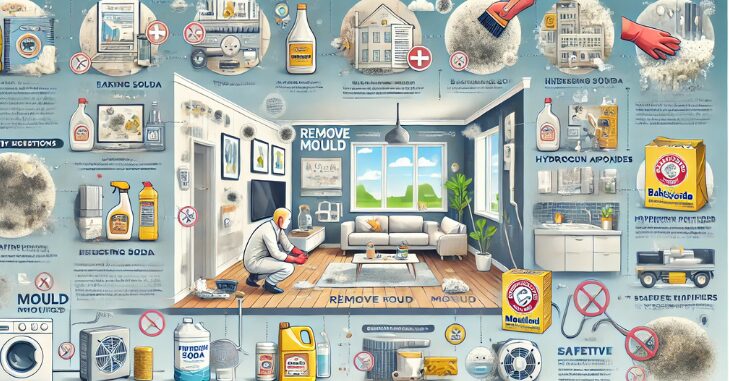
Ceiling mould is usually a sign of condensation in bathrooms and kitchens, or of a leak from the room or roof above. Use a stable stepladder, wear goggles, as drips are likely, and use a spray sparingly so product does not run into your eyes. Wipe, rinse and dry in small sections. If there is a brown water stain with the mould, check the loft, roof and any bathroom above before redecorating. In a bathroom, the ceiling is often the first place to show that the extractor fan is too weak or not being used long enough.
Bathrooms, silicone and grout
Black spots on shower sealant are very common. Surface mould on grout usually comes off with a mould spray and a stiff toothbrush. Mould that has grown into silicone, however, cannot be cleaned out; the only lasting fix is to cut out the old sealant, clean and dry the joint, and apply a new anti-mould silicone. Run the extractor fan during showers and for 15 to 20 minutes afterwards, and squeegee tiles and glass. If you are renovating, our bathroom ideas guide includes ventilation-friendly layouts.
Windows and frames
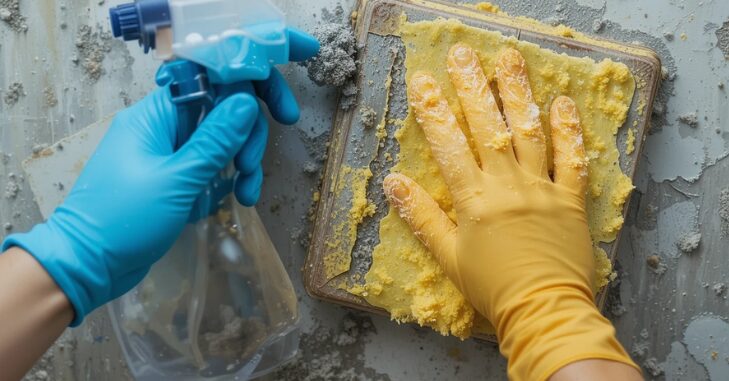
Wipe condensation off windows every morning in cold weather, clean black mould from rubber seals and uPVC with a mould spray or vinegar, and dry thoroughly. Open trickle vents at the top of frames if you have them; they are designed to let a small amount of air through constantly. Persistent streaming condensation on single glazing or on double glazing with failed seals is a sign the glass is too cold.
Furniture, fabrics and carpets
- Solid, sealed wood: wipe with a cloth dampened in mild detergent, dry fully and leave in a well-ventilated room. Move wardrobes and sofas a few centimetres away from outside walls so air can circulate.
- Clothes and washable fabrics: brush off outdoors, then wash at the highest temperature the label allows and dry completely.
- Upholstery and mattresses: light surface marks can sometimes be cleaned professionally, but items with deep or widespread mould are often best replaced.
- Carpets: mould after a leak or flood usually means the underlay is affected too. Small areas may respond to a professional clean; larger ones generally need replacing once the floor has dried.
How to stop mould coming back
Prevention is mostly about controlling moisture. Aim to keep indoor relative humidity roughly between 40% and 60%; a cheap hygrometer will tell you where you are.
- Put lids on pans and use the cooker hood when cooking.
- Keep bathroom and kitchen doors closed while in use so steam does not spread.
- Dry laundry outside where possible, or in one room with the window open or a dehumidifier running. Our guide to choosing a dehumidifier for drying clothes compares the main types.
- Vent tumble dryers outside, or use a condenser or heat pump model.
- Keep the home at a steady, moderate temperature in winter rather than letting it get very cold and then heating it quickly.
- Keep gutters and downpipes clear and fix leaks promptly.
Typical costs of fixing mould problems
Prices vary widely by region, property and supplier, so treat these as rough guides and get quotes.
| Fix | Rough UK cost |
|---|---|
| Mould remover spray | A few pounds per bottle |
| Anti-mould paint | Roughly £20 to £50 per tin |
| Home dehumidifier | Roughly £100 to £300 |
| Replacing bathroom sealant (DIY) | Under £20 in materials |
| New or upgraded extractor fan, fitted | Often a few hundred pounds including an electrician |
| Professional damp survey | Often a few hundred pounds; choose an independent surveyor |
If you rent: your rights
In England, landlords must keep rented homes fit for human habitation, and serious damp and mould is one of the hazards councils assess under the Housing Health and Safety Rating System. Report mould to your landlord in writing, with photos and dates. If the landlord does not act, contact your local council’s private housing or environmental health team. Social housing tenants in England have extra protection under Awaab’s Law, which from October 2025 requires social landlords to investigate and fix damp and mould hazards within set timescales. Rules differ in Scotland, Wales and Northern Ireland, so check your nation’s guidance or contact Shelter or Citizens Advice.
Frequently asked questions
What kills mould permanently?
No cleaner gives permanent results on its own. Fungicidal products remove existing growth, but mould returns unless you fix the moisture source and keep humidity down.
Is vinegar or bleach better for mould?
Bleach works on non-porous surfaces such as tiles but performs poorly on plaster and wood. Vinegar is gentler and suits light mould on hard surfaces. Never mix the two.
Can I paint over mould?
No. Clean the mould off, let the surface dry completely and deal with the damp first. Anti-mould paint helps prevent regrowth but will not stop mould that is still active underneath.
When should I get professional help with mould?
If the mould covers more than about one square metre, is caused by a leak, sewage or rising damp, keeps returning, or someone in the home has a health condition that makes them more vulnerable.
Is my landlord responsible for mould?
Landlords are responsible for damp caused by disrepair, such as leaks or failed damp-proofing, and must keep the home fit to live in. Report it in writing and contact your council if nothing is done.
This guide is general information, not medical or legal advice. If you have health concerns about mould, speak to your GP or NHS 111.