
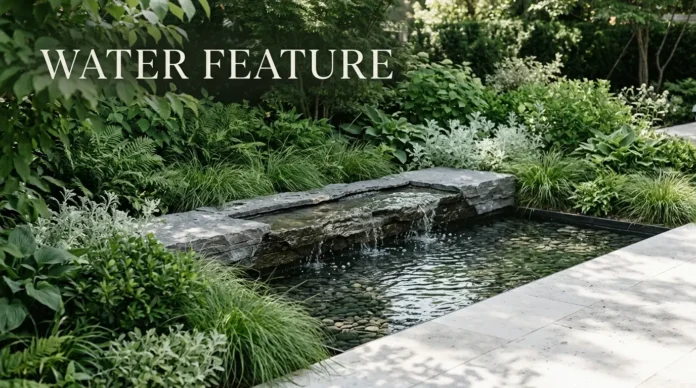
A water feature can add movement, sound, and a stronger focal point to a UK garden. You don’t need a large pond or complicated plumbing to get those benefits. Many modern designs recirculate their own water and need little more than suitable power and routine cleaning.
The right choice depends on your garden size, style, sunlight, and how much time you have to maintain it. A compact patio needs a different solution from a large planted garden. This guide compares practical options and explains how to choose one that works through typical British conditions.
| Planning point | Practical starting point | Why it matters |
|---|---|---|
| Garden size | Match the feature to nearby paving and planting | Oversized designs can dominate compact plots |
| Power | Choose solar or mains before selecting a position | Power affects reliability and placement |
| Style | Coordinate materials with the house and hard landscaping | Repeated finishes make a garden feel planned |
| Sound | Decide between gentle bubbling and stronger cascading water | Flow level changes the atmosphere |
| Maintenance | Allow access to the pump and reservoir | Easier access makes cleaning faster |
| Wildlife | Use accessible water where wildlife is a priority | Birds and other animals can benefit |
| Winter care | Check the pump and material requirements | Freezing weather can damage unsuitable components |
For most UK gardens, choose a self-contained fountain that matches the space and available power. Solar models suit bright, unwired positions, while mains pumps offer steadier flow through cloudy weather. Prioritise safe placement, easy cleaning, frost protection, and a scale that complements nearby planting or seating.
How to Choose a Water Feature for a UK Garden
Start with the job you want the design to perform. Moving water can create a focal point, add background sound, or soften a paved seating area. A pond provides a different experience because wildlife and planting become more important.
Next, consider the practical limits of the intended location. Check sunlight, access to electricity, nearby trees, level ground, and how people move through the space. Considering these points first prevents an attractive purchase from becoming awkward to use.
Seven Practical Styles Compared
UK homeowners can choose from simple bowls through to ponds and architectural rills. Each option creates a different visual effect and maintenance commitment. The comparison below can help you narrow your choice before you start shopping.
| Type | Best for | Relative cost | Upkeep | Main advantage | Main trade-off |
|---|---|---|---|---|---|
| Self-contained bowl | Patios and first-time buyers | Low to medium | Low | Simple installation | Needs regular topping up |
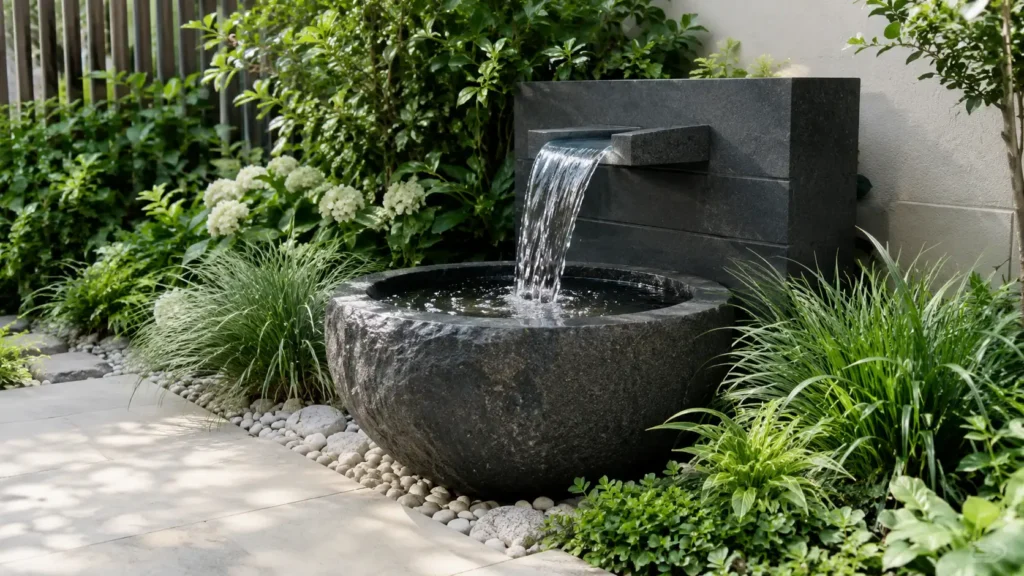
| Wall fountain | Courtyards and narrow gardens | Medium | Low | Saves floor space | Requires a suitable wall |
| Solar bubbler | Sunny gardens without outdoor sockets | Low to medium | Low | No mains cable | Flow varies with sunlight |
| Stone sphere | Traditional or contemporary planting | Medium to high | Medium | Strong focal point | Heavy to reposition |
| Steel or Corten fountain | Modern gardens | Medium to high | Low to medium | Architectural appearance | Finish may not suit every property |
| Wildlife pond | Nature-focused gardens | Medium to high | Medium to high | Valuable habitat | Needs more planning and care |
| Rill | Formal and contemporary layouts | High | Medium to high | Strong linear design | Usually needs installation work |
For ease of ownership, a self-contained bowl is the strongest starting point for many households. It avoids the construction work a pond or rill requires. Its compact reservoir also makes pump access and cleaning comparatively straightforward.
For visual impact, stone, steel, and wall-mounted designs make stronger architectural statements. Their shape should relate to the garden rather than compete with everything around it. Repeating nearby paving, furniture, or building colours can help the new element feel intentional.
Solar or Mains Power: Which Is Better?
Solar power makes sense when the preferred position sits far from an outdoor socket. Performance depends on available light, panel position, and whether the model includes battery storage. Battery-backed systems can provide more consistent performance when direct sunshine changes.
Mains power generally suits homeowners who want predictable flow for longer periods. It can also support stronger pumps and lighting more reliably than basic solar systems. Electrical equipment and connections must always be suitable for outdoor use.
Finding the Right Position in a Small Garden
Scale matters most in compact gardens because every object competes for limited visual space. Choose one focal point rather than several unrelated ornaments. A low bowl, small sphere, or wall-mounted fountain can add movement without blocking useful floor area.
Think about the wider layout before fixing the final position. DecoHome’s budget small garden ideas can help you organise planting, surfaces, and focal points together. Its guide to more functional outdoor spaces is also useful when you need to improve access and circulation.
Sound should influence the position as much as appearance. Gentle bubbling beside a bench may feel pleasant, while a forceful cascade could become distracting. Listen from doors, windows, seating areas, and neighbouring boundaries before settling on a higher-flow design.
How Much Should You Budget?
Costs vary widely because materials, dimensions, pumps, lighting, and installation all affect the final price. Current UK guides show simple solar options beginning around £30. Large bespoke stone installations can reach several thousand pounds.
Purchase price isn’t the only cost worth considering. Larger pumps can use more electricity, while stonework or built-in reservoirs may require professional installation. Set aside a separate budget for a suitable outdoor supply when mains electricity isn’t available nearby.
A cheap design isn’t automatically poor value, especially for a small rented or temporary garden. Spending more makes sense when material quality, scale, or architectural impact matters. Compare the whole installation, not just the ornament.
Making the Design Work With Your Garden
Match contemporary homes with simple forms, restrained colours, and uncluttered planting. Dark metal, Corten steel, smooth stone, and geometric bowls work naturally beside modern paving. Softer planting around the base can stop hard materials from looking severe.
Traditional gardens often suit weathered stone, tiered fountains, urn shapes, or informal ponds. Combine them with planting rather than placing them alone on bare paving. Ferns, grasses, hostas, and flowering perennials can connect hard surfaces with surrounding greenery.
Covered seating can also shape your decision. DecoHome’s UK pergola ideas show how focal points, furniture, planting, and structures can work together in one scheme. Keep enough distance between moving water and seating to prevent unwanted spray.
Maintenance Through the UK Seasons
Recirculating designs still need occasional attention because leaves, algae, and mineral deposits can build up. Keep the pump intake clear and top up the reservoir when evaporation lowers the level. Follow the manufacturer’s cleaning instructions, as materials and pump designs vary.
Cold weather deserves particular attention. Some systems require exposed pipes to be drained or pumps to be removed before freezing conditions. UK gardening guidance also recommends protecting vulnerable components before winter frost arrives.
Don’t assume every stone, ceramic, or resin product can remain full through winter. Water expands as it freezes and can damage unsuitable containers or fittings. Check the specific frost guidance supplied with the model you buy.
Designing for Wildlife and Family Safety
A pond can provide drinking, bathing, and habitat opportunities for garden wildlife. The RHS highlights ponds, container ponds, bog gardens, and other watery habitats as valuable garden environments. Gently sloping access and suitable planting can make ponds more useful for wildlife.
Open water also needs careful planning in gardens used regularly by young children. A pebble-covered reservoir or bubbling stone can create sound without exposing a deep basin. Let safety guide the design before appearance or price.
Wildlife-friendly, child-conscious design doesn’t always require a large, permanent pond. Even carefully planned smaller sources can offer drinking opportunities for birds and insects. Browse DecoHome’s gardening guides when planning planting around the wider area.
Our Verdict: The Best Choice for Most UK Gardens
For most households, a self-contained fountain offers the best balance of appearance, installation effort, and upkeep. Choose a proportionate model with easy pump access and a sound level you enjoy. Pick mains power for consistency or solar power when cable-free positioning matters more.
Small gardens often benefit from wall fountains or compact bubbling bowls. Wildlife-focused households should consider a properly planned pond instead. Larger contemporary gardens can justify a rill, stone monolith, or steel centrepiece when the wider landscaping supports it.
The strongest designs rarely succeed because they are the largest or most expensive. They work because their scale, materials, position, and sound suit the surrounding space. Make those decisions first, then choose the product.
Frequently Asked Questions
What is the easiest water feature to maintain?
A self-contained bowl or bubbling fountain is usually among the simplest choices. The pump and reservoir stay together, so you have less construction and pipework to manage. You will still need to top up the water and clean the pump periodically.
Do garden fountains need plumbing?
Many domestic fountains do not require a permanent water supply. They recirculate water from an internal or concealed reservoir using a small pump. You normally fill the reservoir manually and replace water lost through evaporation or splashing.
Do solar fountains work in the UK?
Yes, but performance varies with sunlight, panel position, and the system design. Battery-backed products can store energy and reduce interruptions during changing conditions. Mains power remains the safer choice when dependable flow is a priority.
Can moving water help garden wildlife?
Accessible garden water can provide wildlife with drinking and bathing opportunities. A planted pond offers broader habitat benefits than a purely decorative fountain. Whatever you install, make sure animals have a safe route out of open water.
Plan the Whole Garden Before You Buy
Measure the chosen position and observe it at different times of the day. Decide how much sound, maintenance, and electrical work you are comfortable accepting. Then choose a design that supports your existing garden rather than dominating it.
For more UK garden planning ideas, explore DecoHome’s guides on gardening, pergolas, and small gardens. They can help you coordinate planting, seating, hard landscaping, and focal points. A considered layout will usually age better than an isolated decorative purchase.