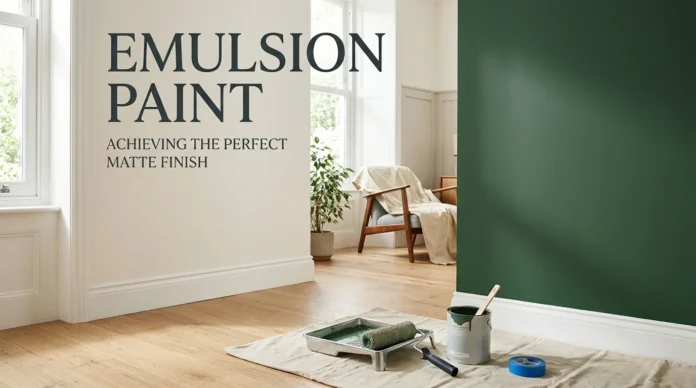
Emulsion paint is the standard choice for decorating most interior walls and ceilings in UK homes. It is water-based, easy to apply, and available in several finishes. Choosing the correct type can make a noticeable difference to appearance and maintenance.
Quick answer: Emulsion is a water-based coating for interior walls and ceilings. Choose matt for a soft, forgiving finish and durable matt for busy family areas. Use moisture-resistant formulas for kitchens or bathrooms. Prepare surfaces carefully, then follow the manufacturer’s guidance on coverage, drying, and recoating for the best result.
| Decorating decision | Good starting point | Why it works |
|---|---|---|
| Living rooms | Matt or durable matt | Soft appearance and low reflection |
| Bedrooms | Matt | Calm finish that hides minor imperfections |
| Hallways | Durable or washable matt | Better resistance to frequent cleaning |
| Kitchens | Washable or kitchen-specific formula | Handles marks, grease, and regular wiping |
| Bathrooms | Moisture-resistant wall coating | Better suited to humid conditions |
| Ceilings | Flat matt or matt | Reduces glare and hides surface variation |
| Uneven walls | Matt | Low sheen makes defects less obvious |
| Busy family spaces | Durable matt | Combines low sheen with easier cleaning |
Key Takeaways
- Matt suits many living rooms, bedrooms, ceilings, and imperfect walls.
- Durable matt is useful where fingerprints, scuffs, or frequent cleaning are expected.
- Kitchens and bathrooms benefit from formulas designed for moisture or repeated wiping.
- Silk reflects more light and can expose bumps, repairs, and roller marks.
- New plaster needs suitable preparation before normal finishing coats are applied.
- Always check the tin for coverage, dilution, drying, and surface instructions.
What Is Emulsion and Why Is It Used Indoors?
Most wall emulsions combine water, pigment, binders, and other additives into an easy-to-apply decorative coating. They are mainly designed for plastered walls and ceilings, not doors or skirting boards. Water-based formulas also make brushes and rollers easier to clean after decorating.
The main differences between products come down to sheen, durability, washability, and suitability for specific rooms. A basic matt finish can work well in quiet spaces. A tougher washable formula is often more practical where walls face regular contact.
Current UK decorating guides also emphasise matching the finish to your walls’ condition. Lower-sheen coatings tend to disguise minor surface defects better than shinier finishes. Silk can reflect light across every bump or poorly filled repair.
How to Choose Emulsion Paint for Different Finishes
Matt remains popular because it gives walls a soft look without strong reflections. It works especially well when older plaster has small imperfections. Standard versions may mark more easily than tougher washable products.
Durable matt keeps much of that low-sheen look while resisting everyday cleaning better. This makes it useful in hallways, family rooms, and children’s bedrooms. It can also suit kitchens when the manufacturer approves the product for that environment.
Silk produces a noticeably shinier surface and is traditionally chosen for easier wiping. That sheen can brighten a room by reflecting more light. It can also highlight ridges, dents, filler patches, and uneven plaster.
| Finish | Appearance | Cleaning | Good locations | Main drawback |
|---|---|---|---|---|
| Matt | Flat or low sheen | Varies by product | Bedrooms, lounges, ceilings | Basic versions can mark |
| Durable matt | Low sheen | Easier to wipe | Halls, family rooms, kitchens | Usually costs more |
| Soft sheen | Gentle reflection | Good | Busy living spaces | Shows more wall defects |
| Silk | Noticeable shine | Usually easy | Selected high-use areas | Highlights imperfections |
| Specialist moisture-resistant | Varies | Product dependent | Kitchens and bathrooms | Must suit the exact surface |
Match the Finish to Each Room
Living rooms usually suit matt because the finish feels softer and creates less glare. Durable versions make sense when children or pets frequently brush against the walls. Colour should also work with the room’s daylight and artificial lighting.
Bedrooms generally need less intensive cleaning than hallways or kitchens. A standard matt can therefore provide a practical, attractive finish. Softer colours and lower sheen can also support a calmer decorating scheme.
Hallways, stairs, and landings face bags, hands, shoes, and regular movement. A washable or durable product gives you more freedom to remove everyday marks. These spaces rarely reward choosing the cheapest standard coating.
For kitchens, prioritise washability and surface suitability over colour. DecoHome’s kitchen paint guide explains why grease, steam, and repeated cleaning affect the choice. A specialist or durable wall formula is usually more sensible near active cooking areas.
Bathrooms create another set of conditions because humidity can remain high after showers or baths. Choose a product whose manufacturer specifically approves it for humid interiors. DecoHome’s bathroom ideas guide can help coordinate practical finishes with the wider room design.
Matt or Silk: Which Is Better?

Matt is usually the safer choice when the wall surface isn’t perfect. Its low reflection makes slight bumps, filler patches, and old plaster movement less noticeable. The resulting appearance also suits many current UK interiors.
Silk can be useful where a shinier, easily wiped surface is wanted. Yet the reflected light makes surface preparation more important. Poor filling or sanding can remain obvious after the final coat dries.
Modern durable matt products have made that decision less dependent on cleaning alone. You can now choose a flatter look without automatically accepting a delicate surface. Check the manufacturer’s cleaning claims because performance differs between products.
What About Kitchens, Bathrooms and Busy Areas?
A room’s conditions matter more than the largest words on the tin. Kitchens face grease and splashes, while bathrooms add persistent moisture. Hallways and children’s rooms see more physical contact and more frequent cleaning.
Look for clear manufacturer statements on washability, moisture resistance, or intended room use. A generic interior coating may not perform like a specialist product under repeated wiping. Product instructions should always take priority over broad decorating rules.
Preparation matters in these rooms because contaminants can weaken adhesion. Clean cooking residue before painting kitchen walls and resolve active damp before decorating bathrooms. Fresh paint cannot correct an underlying moisture problem.
Painting New Plaster
Fresh plaster needs special treatment before normal finishing coats are applied. Highly absorbent bare plaster can draw moisture from a full-strength coating too quickly. This can reduce adhesion and create an uneven finish.
Manufacturers commonly specify a suitable first coat or diluted mist coat for new plaster. Follow the instructions for the specific product rather than using a universal dilution ratio. Different formulations can require different preparation.
The plaster should also be dry enough for decoration before you begin. Painting damp material can trap moisture and cause later problems. Check the plasterer’s advice and the coating manufacturer’s requirements first.
Preparing Previously Painted Walls
Start by checking whether the existing surface is sound, clean, and firmly attached. Remove loose material and repair cracks or dents before applying a decorative finish. Sand filled areas smooth once the filler has cured.
Dust, grease, and residue can interfere with adhesion or leave visible patches. Kitchens often need more careful degreasing around cooking areas and switches. Avoid painting over mould until its cause has been addressed.
Previously painted glossy surfaces may need extra preparation before a flatter coating is applied. Follow the new product’s instructions regarding abrasion or primer. Test a small area to catch compatibility issues before you repaint an entire room.
How to Apply Wall Emulsion
A roller is the familiar choice for covering broad walls and ceilings. Use a brush around edges, switches, corners, and areas the roller cannot reach. Work methodically so adjoining areas remain consistent as the coating dries.
Two finishing coats are common, but the product instructions should determine the final number. Major colour changes or difficult substrates may need extra work. Avoid applying one excessively thick coat to save time.
Large empty spaces can sometimes benefit from spraying instead. Spraying requires extensive masking and careful equipment cleaning, so it does not suit every project. DecoHome’s paint sprayer guide compares spraying with more traditional application methods.
How Much Paint Do You Need?
Begin by measuring the height and width of each wall you plan to cover. Multiply those figures to calculate each surface area, then add the walls together. Deduct large doors or windows when they significantly reduce the painted area.
Next, compare that total with the coverage figure printed on your chosen product. Remember that the stated figure normally relates to one coat. Multiply your calculated area by the number of coats required.
Keep a modest allowance for touch-ups, absorbent patches, and future repairs. Buying every tin from the same batch can also reduce slight colour variation. Store any remaining coating according to the manufacturer’s instructions.
Choosing Colour in a UK Home
British daylight can make a colour look different from a small shop sample. North-facing rooms often receive cooler-looking light, while evening bulbs can warm the same shade. Testing a larger sample across different times of day is worthwhile.
Consider flooring, furniture, curtains, worktops, and other fixed finishes before selecting the wall colour. These existing elements already create the room’s main undertones. A shade that works beside them usually feels more connected.
DecoHome’s room decor ideas explain how colour works with lighting, texture, furniture, and artwork. Planning those elements together prevents paint from becoming an isolated decision. It also makes later furnishing choices easier.
Common Mistakes to Avoid
- Choosing silk for uneven plaster without checking how strongly it reflects defects.
- Using basic matt in areas that require frequent washing.
- Painting over grease, dust, loose coating, or unresolved damp.
- Assuming every new-plaster product uses the same dilution ratio.
- Judging colour only from a small printed card.
- Ignoring the manufacturer’s recoat and drying instructions.
- Applying wall coatings to doors or trim without checking suitability.
- Buying paint without calculating the total area and number of coats.
Frequently Asked Questions
What is emulsion paint used for?
It is mainly used on interior walls and ceilings in homes and similar spaces. Different formulations suit bedrooms, living areas, kitchens, bathrooms, or high-traffic spaces. Check the product label because not every formula suits every room.
Is matt or silk better for walls?
Matt usually gives a softer look and hides minor imperfections better. Silk is shinier and can be easier to wipe, depending on the product. Durable matt can provide a useful middle ground for many households.
Can I use ordinary wall paint in a bathroom?
Only use it when the manufacturer confirms it suits the room’s conditions. Bathrooms often benefit from coatings designed to tolerate moisture and cleaning. Ventilation and condensation control remain important, whatever finish you choose.
Do previously painted walls need primer?
Not every sound painted wall needs primer before recoating. Bare patches, stains, glossy surfaces, or difficult substrates may require specialist preparation. Follow the coating manufacturer’s instructions for the surface in front of you.
How many coats should I apply?
Two finishing coats are common for many interior wall products. Coverage can change with colour, substrate, and the quality of the existing surface. Use the tin’s application guidance instead of assuming one rule fits every product.
Can you use wall paint on wood?
Wall coatings are primarily formulated for walls and ceilings, not frequently handled timber. Doors, skirting boards, and other trim usually need products designed for harder wear. If colour matching matters, check whether the manufacturer offers suitable coordinating finishes.
Choose the Finish Before You Choose the Colour
A successful paint job starts with the demands placed on the surface. Decide how much cleaning, moisture, traffic, and surface imperfection the room involves. Then choose a finish that balances appearance with practical performance.
Matt suits many quiet rooms, while durable formulas make sense where walls work harder. Consider specialist products where moisture or repeated cleaning is expected. Always read the product instructions because similar-looking tins can perform differently.
Once the finish is settled, test colours in the room before buying the full quantity. Review DecoHome’s wider range of room ideas if you are planning more than a simple repaint. A coordinated approach to colour, light, furniture, and texture usually produces a more considered interior.