Window privacy film can make an overlooked UK home feel more comfortable without blocking valuable daylight. Different films provide different levels of screening, so choosing by appearance alone can cause problems. The right option depends on your room, glazing, daylight, and when you need privacy most.
Quick answer: Frosted film suits rooms needing reliable day-and-night privacy, including bathrooms and ground-floor bedrooms. Reflective one-way film works better for daytime screening where you still want an outward view. Patterned film balances decoration with privacy, while blackout film suits spaces where blocking both light and views matters most.
| Film type | Privacy provided | Works at night? | Daylight | Best suited to |
|---|---|---|---|---|
| Frosted | Strong two-way screening | Yes | Good | Bathrooms, doors, bedrooms |
| One-way reflective | Strong daytime screening | Not reliably | Good | Street-facing living rooms, offices |
| Patterned or reeded | Moderate to strong | Usually | Good | Kitchens, hallways, decorative windows |
| Blackout | Complete visual blocking | Yes | None | Storage areas, unwanted views |
| Static-cling | Depends on finish | Depends on type | Varies | Renters and temporary installations |
Key Takeaways
- Choose frosted film when you need dependable privacy after dark.
- Choose reflective film mainly for daytime privacy and outward visibility.
- Consider patterned designs when appearance matters as much as screening.
- Check whether your glazing suits the chosen product before installation.
- Test how the film looks from inside and outside before covering several windows.
- Keep curtains or blinds where reflective film must also work during evenings.
Why Privacy Film Works Well in UK Homes
Overlooking is common in terraced streets, flats, and newer housing developments. Window privacy film offers a practical solution by creating screening without blocking the entire window with curtains. It helps maintain natural light while improving privacy and allowing you to enjoy a brighter, more comfortable living space.
This approach can work particularly well in compact homes where daylight affects how spacious rooms feel. DecoHome’s room decor ideas for UK homes also emphasise protecting natural light when arranging smaller rooms. Film lets you address privacy without adding another bulky fitting around the window.
The important point is that products do not all behave the same way. Frosted finishes scatter the view, while reflective finishes depend heavily on differences in light levels. Understanding that distinction prevents one of the most common buying mistakes.
Which Window Privacy Film Gives the Best Privacy?
The best choice depends on whether you need privacy during daylight, after dark, or throughout the day. Frosted finishes are generally the most dependable option for continuous screening. They obscure views from both directions instead of relying on a reflective effect.
One-way reflective products suit a different goal. During bright daytime conditions, the outside surface can appear reflective while people indoors retain an outward view. This makes them attractive for lounges, home offices, and other street-facing rooms.
The limitation appears after sunset. When the room becomes brighter than the exterior, the reflective effect can reverse. Curtains or blinds remain useful when evening privacy matters.
Frosted Film: The Dependable Day-and-Night Choice
Frosted products mimic the look of etched or sandblasted glass. They diffuse detail through the pane while still allowing a useful amount of light through. This combination makes them suitable for rooms where privacy matters throughout the day.
Bathrooms are an obvious example because privacy cannot depend on outside brightness. Ground-floor bedrooms, entrance doors, and sidelights can benefit for the same reason. DecoHome’s 2026 bathroom ideas show how light and practical surfaces influence successful bathroom planning.
Frosted finishes also vary considerably in opacity. A lighter version may blur faces while still showing movement or silhouettes. Denser options give stronger screening, so checking a sample before ordering is sensible.
One-Way Reflective Film: Best for Daytime Privacy
Reflective products can help where you want to see outside without feeling exposed during daylight. They work through differences between indoor and outdoor brightness. The brighter side becomes more reflective, which usually means the exterior during the day.
This option often suits front living rooms facing a pavement or neighbouring properties. It can keep the view more open than a heavily frosted finish. Some reflective products also reduce glare, although performance varies between specifications.
Night-time behaviour is the key drawback. Once indoor lamps become brighter than the street, people outside may see through the glass. DecoHome’s guide to living room lighting can help you plan evening lighting alongside curtains or blinds.
Patterned and Reeded Film for Decorative Privacy
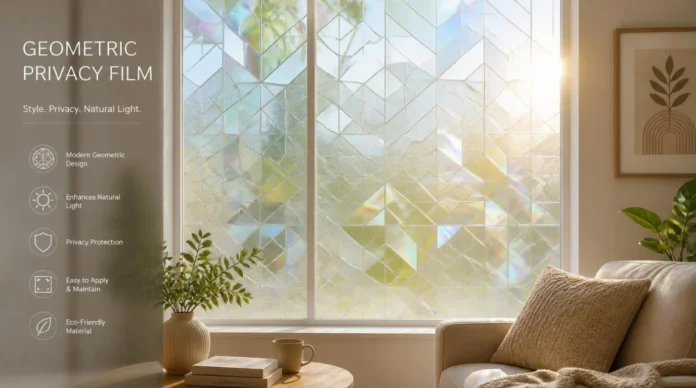
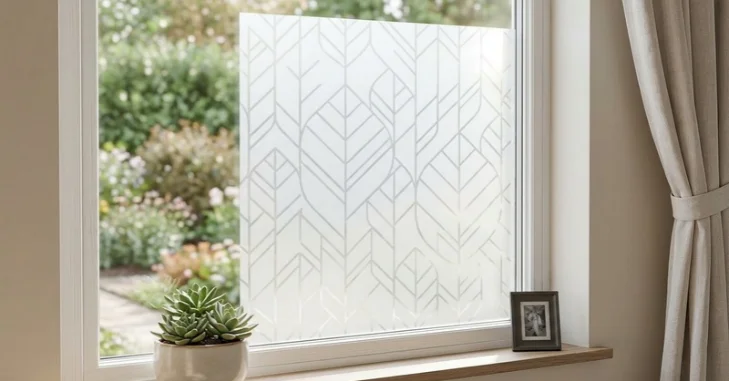
Patterned film makes privacy part of the room’s design rather than hiding the glass behind a plain finish. Reeded, geometric, stained-glass, and textured effects can soften views while adding visual interest. They work particularly well on doors, hallways, kitchens, and bathroom windows.
Privacy strength depends on how much clear space remains within the pattern. Fine translucent patterns can obscure detail effectively while keeping the pane bright. Open designs may look attractive but still allow recognisable shapes through.
Consider the room from both sides before making a final choice. A pattern that feels subtle indoors can look much stronger from outside. Ordering a small sample helps you judge colour, scale, and visibility against real daylight.
Blackout Film When You Want Complete Screening
Blackout products serve a different purpose because they prevent both visibility and transmitted light. They work well when you want to hide an unwanted view completely. Cupboards, storage rooms, garage glazing, and selected door panels are common examples.
They are less suitable where daylight is valuable. Covering a whole bedroom or living-room window can make the space noticeably darker. Use blackout finishes selectively unless reducing light is part of your goal.
Whiteout products can provide similar screening with a lighter appearance. The pane still stops functioning as a normal daylight window. Consider frosted material first when you want strong privacy without losing all brightness.
Choosing Film Room by Room
A bathroom normally needs privacy after dark, making frosted or dense patterned material the safer choice. Good daylight remains valuable because many UK bathrooms have limited window space. Choose enough opacity to conceal detail without making the room unnecessarily gloomy.
A street-facing lounge has different priorities. Reflective film can preserve the outside view during daylight while reducing unwanted visibility from the pavement. Keep curtains, blinds, or another covering available for evening use.
Bedrooms need a balance between privacy and comfortable light levels. Ground-floor rooms usually benefit from frosted finishes when occupants want dependable screening. Upper bedrooms may only need partial coverage across the lower section of the pane.
Kitchens and hallways offer more freedom for decorative options. Reeded or patterned designs can disguise an unattractive view while becoming part of the interior scheme. Match the pattern with surrounding colours and finishes rather than treating the window separately.
Full Coverage or Partial Window Coverage?
You do not always need to cover an entire pane. Applying translucent material only across the lower half can block direct sightlines from pavements or nearby windows. The uncovered upper section continues to provide a clear view and maximum daylight.
This approach works especially well on sash windows and street-facing ground floors. Sit or stand where you normally use the room before choosing the film height. Cover the actual sightline rather than choosing an arbitrary measurement.
Partial coverage can also make small rooms feel less enclosed. Maintaining clear glass above eye level preserves longer views towards the sky. That simple detail can protect both privacy and the sense of space.
Check Your Glass Before Installation
Most DIY products are designed for smooth, clean glazing, but compatibility still matters. Double glazing, low-emissivity coatings, textured panes, and specialist glass may require particular products. Always check the manufacturer’s instructions before fitting anything.
Existing windows should also be inspected for cracks or damaged seals. DecoHome covers window improvements within its guide to transformative home upgrades, where natural light remains an important design consideration. Film should complement sound glazing rather than hide an underlying problem.
Condensation deserves attention too because film will not correct poor ventilation or excess moisture. Persistent moisture around frames needs its own solution. DecoHome’s guide to dealing with mould and window condensation explains several related prevention measures.
How to Fit Privacy Film Neatly
Measure the visible glass carefully before cutting anything. Check the width and height in several places because older frames may not be perfectly square. Follow the product instructions for trimming allowances and edge clearance.
Cleanliness has a major effect on the finished result. Dust, fibres, grease, and dried cleaning residue can become trapped beneath the material. Clean the pane thoroughly and prepare your tools before removing any backing layer.
Many DIY films use a wet-application process that allows repositioning before the solution is removed. A squeegee pushes moisture and air towards the edges. Work slowly from the centre and avoid repeatedly lifting settled sections.
Leave the material to cure according to its instructions. Small cloudy areas or moisture pockets may change as the application dries. Avoid aggressive cleaning until the manufacturer says the surface is ready.
Adhesive or Static-Cling Film?
Adhesive products generally suit longer installations where you want stable edges and a permanent-looking finish. They can work well on larger panes when installed carefully. Removing them later may require more preparation than removing static-cling material.
Static-cling versions attach without conventional adhesive. They are useful for rented homes, temporary screening, and people who like changing decorative finishes. Their suitability still depends on the glass surface and product instructions.
Renters should check their tenancy terms before altering windows. Keep packaging and removal instructions until the film has been taken down. Photographing the original condition also provides a useful record before installation.
Common Mistakes to Avoid
The biggest mistake is assuming every reflective product provides permanent one-way privacy. Light conditions change, particularly during long UK winter evenings. Choose frosted material when the room must remain screened after dark.
Another mistake is choosing maximum opacity without considering daylight. A darker room may create a new problem after solving the original one. Compare samples against the actual window during morning, afternoon, and evening conditions.
Poor preparation can also spoil an otherwise suitable product. Small particles become much more noticeable once trapped behind a smooth surface. Spend more time cleaning and measuring than rushing into application.
Is Window Privacy Film Worth It?
For many homes, film offers a practical middle ground between uncovered glazing and permanently closed curtains. It can change visibility without replacing the window or taking up space around the frame. It also gives you several decorative choices beyond traditional blinds.
Results depend on choosing the product for the correct job. Daytime one-way screening and permanent two-way privacy are different requirements. Decide which problem matters first, then compare finishes within that category.
A small test pane is often the safest starting point. View it from indoors and outdoors at several times of day. That simple trial can prevent covering several windows with a finish that does not suit your home.
Choose Privacy Based on the Moment You Need It Most
Start with the time when your window feels most exposed. Daytime overlooking points towards reflective options, while night-time privacy usually points towards frosted or opaque finishes. Then consider daylight, decoration, tenancy, and the type of glass.
Test a sample before covering several panes. Check the result from both sides during daylight and after switching the room lights on. A careful choice can make your home feel more private without sacrificing the qualities you already enjoy.
Frequently Asked Questions About Window Privacy Film
Does window privacy film work at night?
Some types do, but reflective one-way products are not dependable after dark. Frosted, patterned, whiteout, or blackout finishes provide more consistent screening. Choose according to your hardest privacy period rather than daytime appearance alone.
Can you still see through privacy film?
That depends on the product. Reflective material can preserve an outward daytime view, while frosted film obscures views in both directions. Patterned versions sit between those two results depending on their design.
Does privacy film make a room dark?
Some finishes reduce more daylight than others. Light-transmitting frosted products can maintain a bright appearance despite obscuring detail. Blackout products intentionally stop light and will create the greatest change.
Can privacy film be removed from windows?
Many domestic products can be removed, although methods vary. Static-cling material is usually designed with easier removal in mind. Always follow the product instructions to protect the glass and surrounding seals.
What is the best option for bathroom windows?
Frosted material is usually the most practical choice because it works during both day and night. It keeps the pane useful for daylight while obscuring recognisable views. Choose enough opacity for your window’s position and distance from neighbouring properties.